


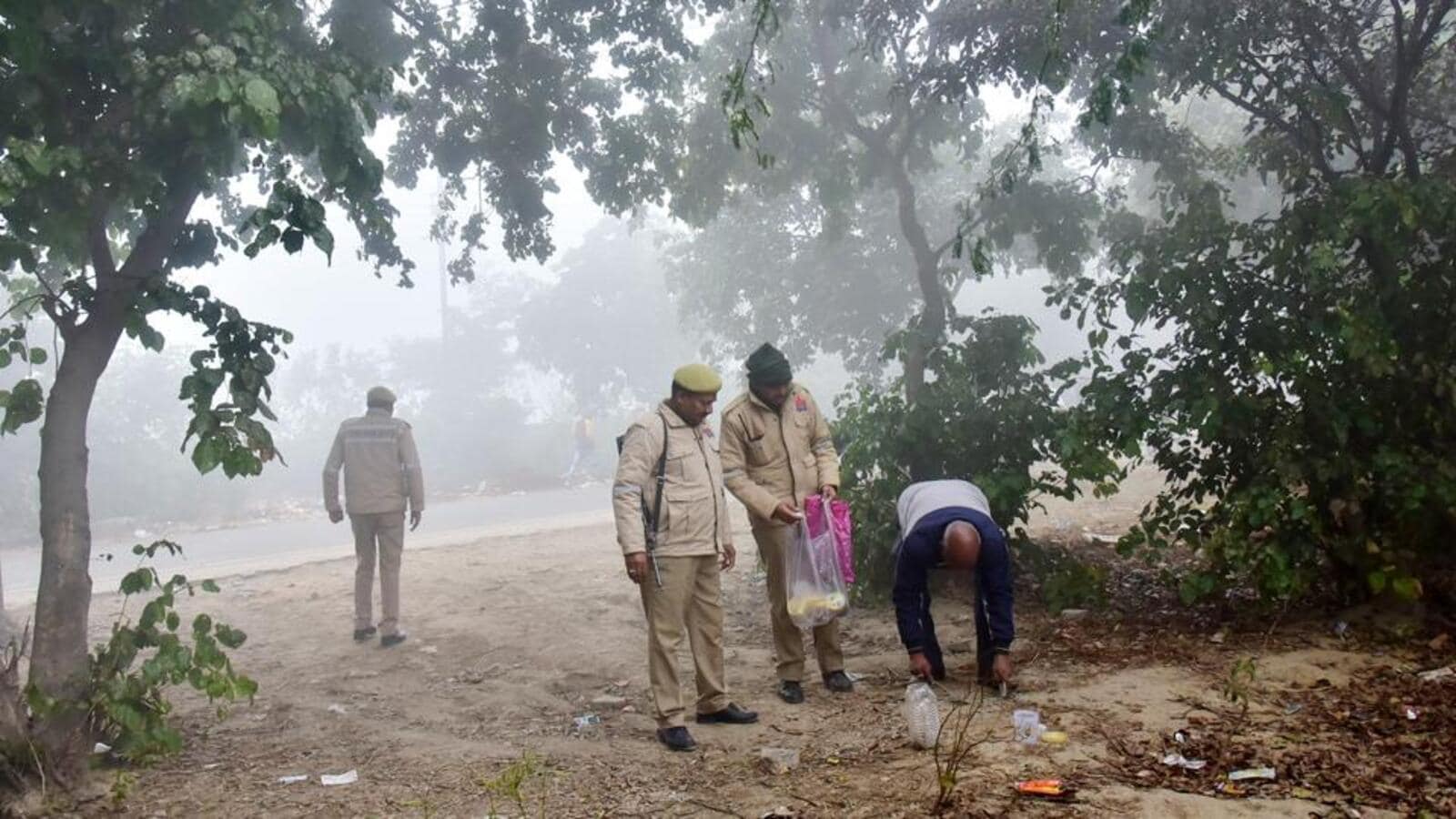
Noida : There was a time when people feared danger from strangers. Today, some of the country’s most talked-about murder cases have sparked a far more unsettling question: What happens when the threat comes from the person you trust the most?
In recent years, India has witnessed a series of chilling crimes in which wives, fiancées or romantic partners allegedly plotted the murders of the very people who loved and trusted them. The deaths of Ketan Agrawal, Saurabh Rajput and Raja Raghuvanshi have dominated headlines, not only because of the brutality involved but because of the deep betrayal at the heart of each case.
These incidents have triggered intense public debate about relationships, trust and the emotional fractures that can lead to unimaginable violence.
The Lohagad Fort tragedy: A wedding that never happened
Twenty-six-year-old real estate businessman Ketan Vishal Agrawal was looking forward to a new chapter in life. Engaged in February 2026 and scheduled to marry later this year, he reportedly had little reason to suspect that his relationship would end in tragedy.
On June 18, 2026, Ketan died after falling nearly 400 feet into a gorge during a trek at Lohagad Fort near Pune. Initially believed to be an accident, the case took a dramatic turn when investigators alleged that his fiancée, Siya Goyal and her alleged lover, Chetan Chaudhary, had conspired to kill him.
According to police, the two had been in a relationship for nearly a year and allegedly viewed Ketan as an obstacle to their future together.
The grief of Ketan’s family resonated across the country. His father’s emotional statement captured the pain many felt while following the case:
“If she did not want to stay with him, she could have simply called off the marriage. Why did she have to kill him?”
For many, the question remains impossible to answer.
The “Blue Drum” murder that horrified the nation
Months earlier, another case had shocked the country. Former merchant navy officer Saurabh Rajput was allegedly murdered in Meerut by his wife, Muskan Rastogi and her alleged lover, Sahil Shukla. Investigators claim Saurabh was drugged before being attacked. His body was allegedly dismembered and hidden inside a blue drum filled with cement.
The gruesome details captured national attention and generated widespread outrage.
What made the case even more heartbreaking was the reported history behind the marriage. Saurabh had chosen love over family objections and built his life around the relationship. The allegations that the relationship ultimately became the motive for his death turned the story into one of the most tragic examples of betrayal in recent memory.
A honeymoon that ended in death
The murder of Indore businessman Raja Raghuvanshi during his honeymoon in Meghalaya added another disturbing chapter to the growing list of relationship-related crimes.
Investigators alleged that Raja’s wife, Sonam Raghuvanshi, conspired with others, including an alleged romantic partner, to orchestrate the killing shortly after their marriage.
The case dominated national news throughout 2025 and became one of the year’s most discussed criminal investigations. For many observers, it reinforced a troubling perception that some of the deepest emotional bonds can sometimes conceal dangerous conflicts.
Why do such crimes happen?
Crime experts caution against drawing broad conclusions from a handful of sensational cases. India records thousands of murders every year and partner-planned killings represent only a small fraction of overall violent crime.
Yet these cases attract extraordinary attention because they violate one of society’s most fundamental expectations: trust.
According to criminologists and sociologists, common factors often include:
- Extramarital or undisclosed romantic relationships
- Financial and property disputes
- Emotional resentment and unresolved conflicts
- Fear of social consequences from ending a relationship
- Manipulation and psychological control
Experts note that while separation, divorce and legal remedies are available, some individuals choose violence as an extreme and unlawful solution to personal conflicts.
The emotional cost beyond the headlines
Behind every sensational headline lies a devastated family.
Parents lose children. Children lose parents. Families spend years searching for answers that may never fully come.
For relatives of victims, the pain is often intensified by the realisation that the alleged perpetrators were not strangers, but people welcomed into the family and trusted without hesitation.
The emotional scars frequently outlast court proceedings, media coverage and public debate.
Can trust be rebuilt?
Sociologists argue that these crimes should not be viewed as evidence that relationships themselves are becoming dangerous. Instead, they highlight the need for healthier communication, emotional support systems and greater awareness of warning signs in troubled relationships.
Counselling, mental health support, legal awareness and open family dialogue can help individuals navigate conflicts before they escalate into tragedy.
While justice systems will determine guilt or innocence in individual cases, the broader question remains relevant for society as a whole:
How can trust be protected in an age where some of the most shocking betrayals emerge from the closest relationships?
The answer may not lie only in criminal investigations or courtrooms. It may also lie in rebuilding honesty, communication and accountability within families and relationships before silence turns into resentment and resentment turns into tragedy.
- Mumbai Local Train Changes: These 2 Churchgate-Virar Trains Will Now Skip Borivali | Mumbai-news News
 News cities mumbai-news Mumbai Local Train Changes: These 2 Churchgate-Virar Trains Will Now Skip Borivali Last Updated:September 02, 2026,… Read more: Mumbai Local Train Changes: These 2 Churchgate-Virar Trains Will Now Skip Borivali | Mumbai-news News
 - ‘Followed legal procedure in search at house of Noida activist’
 Noida police on Wednesday said “all legal procedures” were followed during the search operation at the residence of a… Read more: ‘Followed legal procedure in search at house of Noida activist’
 - Stray dog menace grips Greater Noida’s Beta-1 and Beta-2, Woman injured in morning walk attackGreater Noida: Fear of stray dogs is growing among residents of Greater Noida’s Beta-1 and Beta-2 sectors, with repeated… Read more: Stray dog menace grips Greater Noida’s Beta-1 and Beta-2, Woman injured in morning walk attack
- Tendinitis
 Source: Harvard Medical SchoolRelated MedlinePlus Pages: Tendinitis Source link Post Views: 10
 - Charu Asopa hits back at reports dragging ex-husband Rajeev Sen into her life again
 Interestingly, moving forward hasn’t necessarily meant completely shutting Rajeev out. Charu had warmly welcomed him into her Bikaner home… Read more: Charu Asopa hits back at reports dragging ex-husband Rajeev Sen into her life again
 - EV India Expo 2026 begins in Greater Noida; business deals signed on opening day
 EV India Expo 2026, EV Expo Greater Noida, Electric Vehicle Expo 2026, Greater Noida EV Expo, EV India Expo, electric vehicles, electric vehicle industry, EV technology, electric mobility, EV charging solutions, EV batteries, electric vehicle components, EV seminar, future of electric vehicles, EV business deals, EV MoUs, India Expo Centre Greater Noida, electric mobility India, sustainable mobility, i-FEVA, EV industry India
 - Mumbai Local Train Timetable Change From September 1: 6 New Services, 6 Withdrawn | Check Full Details | Mumbai-news News
 News cities mumbai-news Mumbai Local Train Timetable Change From September 1: 6 New Services, 6 Withdrawn | Check Full… Read more: Mumbai Local Train Timetable Change From September 1: 6 New Services, 6 Withdrawn | Check Full Details | Mumbai-news News
 - Locals protest disconnections after PVVNL crackdown on power theft
 NOIDA: Residents of Noida’s Chhajarsi and Chotpur areas on Monday protested against the electricity supply disruption, demanding restoration of… Read more: Locals protest disconnections after PVVNL crackdown on power theft
 - Tattoos | Young Men’s Health
 Body art has been a form of self-expression for centuries. For some it may be a fashion statement, and… Read more: Tattoos | Young Men’s Health
 - ₹47,000 in India vs ₹22 lakh in US: Indian man shares healthcare experience, says ‘I want to move back’
 Indian man shares healthcare experience, says ‘I want to move back’ For Indians working in the US, moving back… Read more: ₹47,000 in India vs ₹22 lakh in US: Indian man shares healthcare experience, says ‘I want to move back’
 - All You Need To Know
 Planning a Darjeeling getaway around Durga Puja this year? There’s now another reason to add the hills to your… Read more: All You Need To Know
 - GIMS to offer patients financial aid for treatment of serious illness
 GREATER NOIDA: Patients suffering from serious and incurable diseases can seek financial assistance for treatment at the Government Institute… Read more: GIMS to offer patients financial aid for treatment of serious illness
 - 7 unexpected skin reactions and what to do about them
 Even if you get inked by a licensed tattoo artist and follow the aftercare, your skin can react… Read more: 7 unexpected skin reactions and what to do about them
 - 69-year-old Dimple Kapadia proves she’s more stylish than anyone in Bollywood in a mundu-inspired skirt and shawl at Dil Chahta Hai reunion |
 Dimple Kapadia knows how to make an outfit feel interesting without looking like she’s trying too hard. At a… Read more: 69-year-old Dimple Kapadia proves she’s more stylish than anyone in Bollywood in a mundu-inspired skirt and shawl at Dil Chahta Hai reunion |
 - Emraan Hashmi tests positive for swine flu, Bengaluru show postponed
 Mumbai: Bollywood actor Emraan Hashmi has tested positive for swine flu (H1N1), according to multiple reports. The actor had… Read more: Emraan Hashmi tests positive for swine flu, Bengaluru show postponed
 - Noida forms night teams to crack down on illegal garbage dumping
 Noida: In a move aimed at improving cleanliness and preventing environmental damage, Noida authorities have formed specialised teams to… Read more: Noida forms night teams to crack down on illegal garbage dumping
 - Thank You, Noida Authority: First AC skywalk opens, Sector 51–52 metro journey now just 6–7 minutes
 Commuters in Noida can now switch between the Aqua Line’s Sector 51 Metro station and the Blue Line’s Sector 52 station through a new air-conditioned skywalk. Equipped with travelators and lifts, the facility offers a faster, safer and more comfortable alternative to the earlier road-level walk.
 - Amrapali Centurion Park Terrace Homes : Woman allegedly hits security guard during late-night delivery dispute
 A video showing a woman allegedly abusing and assaulting a security guard at Amrapali Centurian Park Terrace Homes in Greater Noida West has gone viral. Police took the woman into preventive detention.
 - Tamil Nadu’s culinary heritage comes alive in Greater Noida West with Virundu by chef Siva
 Greater Noida West: The rich aroma of roasted spices, fragrant rice and freshly prepared South Indian delicacies is set… Read more: Tamil Nadu’s culinary heritage comes alive in Greater Noida West with Virundu by chef Siva
 - India’s EV Sector All Charged Up: Rs 20 Lakh Crore Market, 5 Crore Jobs By 2030, Says Gadkari | India News
 News india India’s EV Sector All Charged Up: Rs 20 Lakh Crore Market, 5 Crore Jobs By 2030, Says… Read more: India’s EV Sector All Charged Up: Rs 20 Lakh Crore Market, 5 Crore Jobs By 2030, Says Gadkari | India News
 - Two sisters stalked, harassed by SUV-borne men with gun in Noida
 Two sisters in their 20s have alleged that they were stalked, harassed and threatened by a group of men… Read more: Two sisters stalked, harassed by SUV-borne men with gun in Noida
 - Photosensitivity and Your Skin
 Source: Skin Cancer FoundationRelated MedlinePlus Pages: Sun Exposure Source link Post Views: 20
 - 7 things you should never keep near an inverter: Common household items that can increase fire and electrical risks |
 When the power goes out, the inverter quickly becomes one of the most useful things in a home. But… Read more: 7 things you should never keep near an inverter: Common household items that can increase fire and electrical risks |
 - Inter-School Hockey tournament opens at Aster Public School Greater Noida
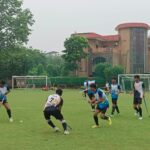 Aster Public School, Greater Noida, hosted the grand opening of an inter-school hockey tournament with 10 teams participating across boys’ and girls’ categories. The tournament will conclude with the finals and medal distribution ceremony on August 29, National Sports Day, marking the 121st birth anniversary of legendary hockey player Major Dhyan Chand.
 - Daily traffic jams at RG Residency crossing trouble thousands of families
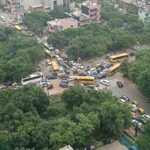 Residents of Sectors 119 and 120 are facing daily traffic jams at the RG Residency crossing, with school traffic, roadside parking, encroachments and poor road infrastructure worsening the situation. Residents have urged authorities to install traffic signals and find a permanent solution.
 - Dengue Concerns Grow At Ace Aspire As Residents Seek Official Data
 More than 200 dengue cases have reportedly been reported at Ace Aspire in Greater Noida West, with residents raising concerns over mosquito breeding and adjoining NBCC construction. Residents have approached authorities seeking urgent preventive action, while the exact case count and alleged role of the construction site await independent verification.
 - Sector 105 Residents Raise Alarm Over Alleged Green Belt Encroachment, Seek Noida Authority ActionSector 105 RWA has alleged encroachment and unauthorised activities on a green belt in D-Block and has urged the Noida Authority to inspect the site and take action if violations are found.
- Do You Know Where India’s Trains Will Face Their Toughest Tests? This 59-Km Track Has The Answer | Jaipur News
 News cities jaipur Do You Know Where India’s Trains Will Face Their Toughest Tests? This 59-Km Track Has The… Read more: Do You Know Where India’s Trains Will Face Their Toughest Tests? This 59-Km Track Has The Answer | Jaipur News
 - Ghaziabad: Traffic restrictions for heavy vehicles on NH-9 from Thursday
 The Ghaziabad traffic police have put in place a traffic regulation and diversion plan for the upcoming Raksha Bandhan… Read more: Ghaziabad: Traffic restrictions for heavy vehicles on NH-9 from Thursday
 - Caring for your skin in menopause
 How to care for your skin during menopause Menopause, which officially begins one year after your last period,… Read more: Caring for your skin in menopause
 - Why do plastic stools have a hole in the center? The real reason explained |
 Why do plastic stools have a hole in the center? You may have sat on a plastic stool many… Read more: Why do plastic stools have a hole in the center? The real reason explained |
 - Noida residents raise concerns over ageing power infrastructure and new connection chargesNoida residents have raised concerns over ageing electricity infrastructure, power fluctuations, outages, manpower shortages and charges on new connections. Sector 105 RWA has urged authorities to modernise the power network and decentralise consumer services.
- Pending flat registrations in Noida and Greater Noida to be mapped through citizen initiativeResidents facing pending flat registries in Noida and Greater Noida can now submit their cases through a citizen initiative launched by NHRF. The data will be analysed to identify common reasons for delays and take up the issue with concerned authorities.
- Bhoomi Pujan held for Prabhu Shri Ramleela 2026 in Greater Noida WestGreater Noida West : Bhoomi Pujan for Prabhu Shri Ramleela 2026 was held on Sunday, August 23, 2026, at… Read more: Bhoomi Pujan held for Prabhu Shri Ramleela 2026 in Greater Noida West
- IMS Law College hosts orientation programme for new students
 IMS Law College in Noida organised a two-day orientation programme for new students, featuring senior legal and judicial experts who highlighted the importance of ethics, practical knowledge, discipline and social responsibility in building a successful legal career.
 - Amrapali Golf Homes and Kingswood : Amarnath Sharma-led team wins ad hoc AOA elections
 The Amarnath Sharma-led team has won the ad hoc AOA elections at Amrapali Golf Homes and Kingswood Society with a decisive mandate. The newly elected team has pledged transparent, accountable and resident-centric governance.
 - ‘Open & Shut Case’: China Bans Tesla-Style Hidden Door Handles After Unprecedented 4.3 Million EV Recall | World News
 News world ‘Open & Shut Case’: China Bans Tesla-Style Hidden Door Handles After Unprecedented 4.3 Million EV Recall Last… Read more: ‘Open & Shut Case’: China Bans Tesla-Style Hidden Door Handles After Unprecedented 4.3 Million EV Recall | World News