


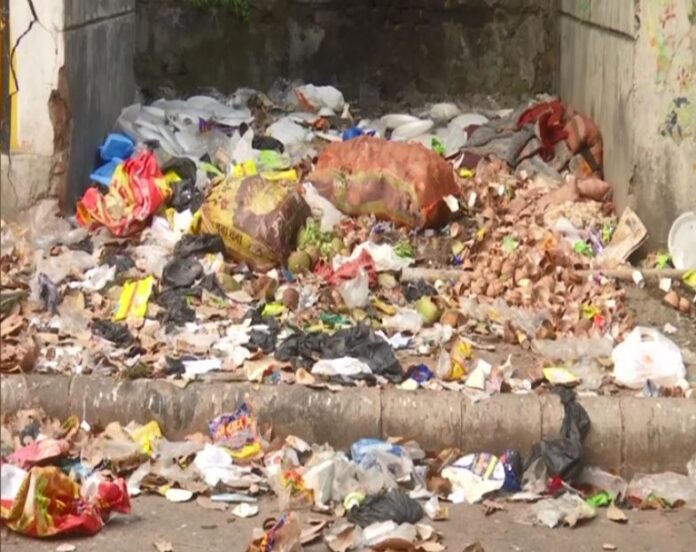

Noida: New Solid Waste Management 2026 rules have been implemented to make solid waste management more effective and environmentally friendly. Under the new regulations, it will now be mandatory for households, institutions, and commercial premises to segregate waste into four categories at the source.
In accordance with the rules, wet waste, dry waste, sanitary waste, and special care waste must be collected separately. Wet waste will comprise fruit and vegetable peels and other organic waste, whereas dry waste will include paper, plastic, and other recyclable materials. Diapers and sanitary pads have been categorized as sanitary waste, while bulbs, tube lights, and expired medicines fall under the category of special care waste.
Under the new rules, buildings with an area of 20,000 square meters or more, establishments consuming over 40,000 liters of water daily, or premises generating more than 100 kilograms of solid waste will be classified as ‘bulk waste generators.’ This category includes community centers, wedding venues, schools, colleges, universities, and large institutional complexes. A centralized online portal has also been launched to make the waste management system transparent and effective.
Noida: New Solid Waste Management 2026 rules have been implemented to make solid waste management more effective and environmentally friendly. Under the new regulations, it will now be mandatory for households, institutions, and commercial premises to segregate waste into four categories at the source.
In accordance with the rules, wet waste, dry waste, sanitary waste, and special care waste must be collected separately. Wet waste will comprise fruit and vegetable peels and other organic waste, whereas dry waste will include paper, plastic, and other recyclable materials. Diapers and sanitary pads have been categorized as sanitary waste, while bulbs, tube lights, and expired medicines fall under the category of special care waste.
Under the new rules, buildings with an area of 20,000 square meters or more, establishments consuming over 40,000 liters of water daily, or premises generating more than 100 kilograms of solid waste will be classified as ‘bulk waste generators.’ This category includes community centers, wedding venues, schools, colleges, universities, and large institutional complexes. A centralized online portal has also been launched to make the waste management system transparent and effective.