



Many lawyers have welcomed the introduction of community service as a punitive measure for minor offences under the Bharatiya Nyaya Sanhita (BNS), which has replaced the Indian Penal Code. Some have highlighted the potential for this kind of action to reduce prison overcrowding and humanise the justice system.
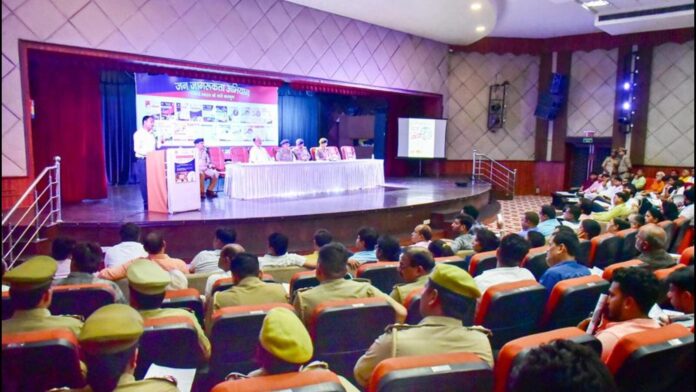
In order to inform both the public and its employees on the new criminal laws, the Ghaziabad police organises a public awareness campaign.
Nonetheless, they emphasised that in order to guarantee successful execution, there must be precise instructions and strong control.
On Monday, the approximately 160-year-old Indian Penal Code (IPC), Code of Criminal Procedure (CrPC), and Indian Evidence Act were subsumed by the new Bharatiya Nyaya Sanhita (BNS), Bharatiya Nagarik Suraksha Sanhita (BNSS), and Bharatiya Sakshya Adhiniyam (BSA).
Community work is now available as a form of punishment under Section 4(f) of the BNS for acts such minor theft, defamation, and suicide attempts with the goal of preventing a public official from performing her official duties.
Leading criminal attorney Sherbir Panag stated that the new law shouldn’t be used as a “get out of jail free” card. He also noted that, if implemented correctly, the law shouldn’t only apply to minor infractions but also to first-time offenders who play a little part in more serious crimes.
The ability of the Indian criminal justice system to punish and prosecute is a fiction. Most of the inmates in our jails are awaiting trial. Numerous nations, particularly the United States, have empirically demonstrated the effectiveness of community service as a type of punitive intervention. However, ensuring genuine community service that is evaluated and tracked will be crucial, according to Panag.
Some of the BNS sections that require community service as a punishment are section 202 (public servants engaging in unlawful trade), section 226 (attempts to commit suicide), section 303(2), section 355, (appearing in public places in a state of intoxication and causing annoyance), and section 356(2) (defamation).
Experts also drew attention to gaps in the new legislation. For instance, the judge presiding over a certain case alone has the authority to determine whether or not the accused is eligible for community service.
Nisha Rai, an attorney, claimed that the new statute is unclear because the judge retains discretion over whether to sentence a person to community service or not.
“There is also uncertainty regarding the administration’s planned implementation of these sanctions. Furthermore, this has the potential to be widely abused and biassed. With regard to problems like jail congestion and the encouragement of offenders’ rehabilitation, this modification seeks to offer an alternative to conventional types of punishment, according to Rai.