



Last Updated:
Understanding how to handle waterlogged roads can prevent life-threatening accidents, mechanical failures, and catastrophic repair bills




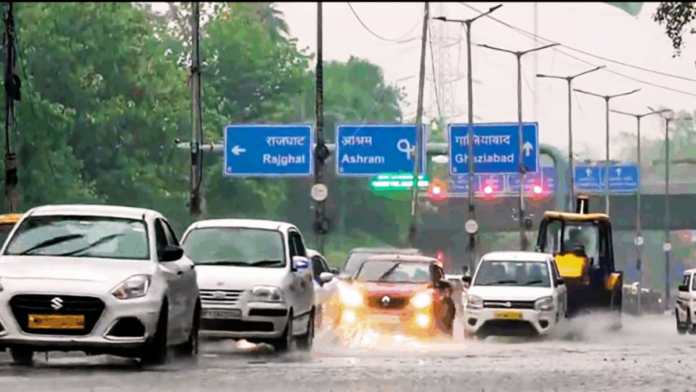
Engine damage caused by water ingestion—known as hydrostatic lock—is the single most expensive mechanical failure during monsoon flooding. Representational image
Torrential downpours across Delhi, Gurugram, Noida, and Ghaziabad have transformed arterial roads into swollen waterways, leaving thousands of motorists stranded in multi-kilometre traffic snarls during peak hours. Navigating submerged flyovers, low-lying underpasses, and flash-flooded corridors poses severe risks to driver safety and vehicle health.
Understanding how to handle waterlogged roads can prevent life-threatening accidents, mechanical failures, and catastrophic repair bills.
Assessing the Depth: Know Your Vehicle’s Wading Limits
Before driving into standing water, gauge its depth relative to other vehicles or surrounding curb structures.
- The Safe Threshold: Water level should stay below the bottom edge of your door frames and below the centre hub of your wheels. For most standard hatchbacks and sedans, water deeper than 15 to 20 centimetres is unsafe to attempt.
- Avoid Underpasses: Low-lying underpasses—particularly along major routes in Gurugram, South Delhi, and Noida—accumulate deep water rapidly. Divert around them rather than guessing the depth.
- Unseen Hazards: Flooded roads mask missing manhole covers, deep open potholes, submerged debris, and washed-out road shoulders. Stick to the crown (the highest central part) of the road whenever possible.
Preventing Hydrostatic Lock: Driving Technique in Deep Water
Engine damage caused by water ingestion—known as hydrostatic lock—is the single most expensive mechanical failure during monsoon flooding. Water entering the air intake instantly destroys internal engine components.
- Engage Lower Gears: Drive through standing water in first or second gear (or manual mode in automatics). Maintain high engine revolutions (RPM) while keeping your vehicle speed low and steady.
- Do Not Stop or Brake: Keep a steady bow wave moving ahead of your front bumper. Stopping or abruptly decelerating causes water to push back up through the exhaust or splash directly into the air intake.
- Never Restart a Stalled Engine: If your car stalls while submerged in deep water, do not attempt to crank the ignition. Turning the key forces water deeper into the cylinders, permanently damaging the connecting rods. Turn off the electricals, abandon the vehicle safely, and call for towing assistance.
Recovering Control During Hydroplaning
At speeds above 45 to 50 km/h, a layer of water can build up between your tyres and the road surface, causing complete loss of steering and braking traction.
- Ease Off the Accelerator: If your vehicle begins to slide or float, gently lift your foot off the gas pedal. Do not slam on the brakes, as locked tyres exacerbate the skid.
- Hold the Wheel Straight: Keep your steering wheel steady in the direction you want to travel. Avoid sharp, panic-driven turns that can cause the vehicle to spin out once traction returns.
- Disengage Cruise Control: Never use cruise control on wet or waterlogged highways, as automated systems cannot react to sudden surface water resistance.
Immediate Post-Wading Safety Protocols
Once you clear a waterlogged stretch, do not immediately accelerate back to normal speeds.
- Dry the Brakes: Gently tap or pump your brake pedal several times at low speed. Friction generates heat, evaporating trapped water from the brake pads and drums to restore full stopping power.
- Check Under the Bonnet: Once parked on dry ground, inspect your air filter and engine bay for dampness before switching off for extended periods.
About the Author

Pathikrit Sen Gupta is a Senior Associate Editor with News18.com and likes to cut a long story short. He writes sporadically on Politics, Sports, Global Affairs, Space, Entertainment, And Food. He tra…Read More
August 08, 2026, 07:00 IST
Read More