


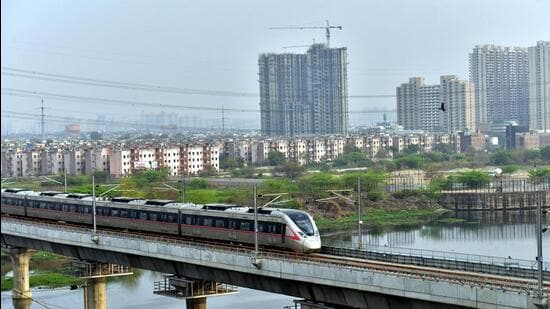

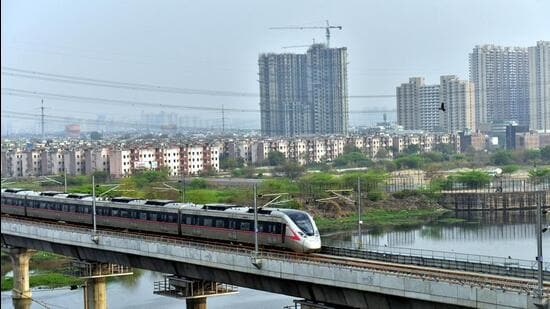
Eight additional Namo Bharat train trips have been introduced during morning and evening peak hours on the Meerut-Delhi-Ghaziabad rapid rail corridor to ease overcrowding and reduce standing travel, the National Capital Region Transport Corporation (NCRTC) said. The additional trips came into effect on Friday.
The decision follows a sharp rise in passenger traffic, especially during office hours, NCRTC officials said. More than 100,000 passengers now travel daily on the corridor. The Meerut Metro is recording an average daily footfall of 20,000 to 25,000 commuters.
At present, 30 Namo Bharat trains operate between Meerut and Sarai Kale Khan in Delhi. However, heavy crowding between 8am and 11am and again from 5pm to 7pm had become routine, with many passengers forced to travel standing.
Crowding has been particularly high at Modipuram, Begumpul, Shatabdinagar and Meerut South stations. NCRTC has deployed two additional trains to ensure smooth operations after the increase in trips.
The Meerut Metro continues to serve as a key feeder network for the Namo Bharat system within the city. Twelve metro trains operate across 12 stations between Modipuram and Meerut South. The Namo Bharat train halts at four stations in Meerut — Modipuram, Begumpul, Shatabdinagar and Meerut South — making the metro service crucial for last-mile connectivity.
Punit Vats, chief public relations officer of NCRTC, said the increased frequency would significantly improve commuter convenience. “Passengers will now get trains every five minutes during peak hours, reducing the need to travel standing. Promoting public transport is essential to reduce dependence on private vehicles,” he said.
He added that if demand continues to rise, operational trains could be increased from 30 to 33, enabling services at intervals of every three minutes.
Daily commuters welcomed the move. Deepak Kumar, a resident of Pallavpuram who regularly travels between Begumpul and Sarai Kale Khan, said overcrowding had become a daily challenge. “Earlier, it was difficult to get a seat during office hours and we often had to travel standing. The additional trips will definitely provide relief,” he said.