



Last Updated:
The Delhi-Dehradun Expressway, constructed at an estimated cost of Rs 12,000-Rs 13,000 crore, spans roughly 210 kilometres and cuts across Delhi, Uttar Pradesh and Uttarakhand




The expressway will cut travel time between Delhi and Dehradun to just over 2 hours, down from the current 5-6 hours. (PTI)
In a major push to the country’s road infrastructure, Prime Minister Narendra Modi is set to inaugurate the much-awaited Delhi-Dehradun Expressway on April 14 during his visit to Uttarakhand, marking a significant milestone for connectivity in northern states.
According to a report by The Times of India, the expressway will cut travel time between Delhi and Dehradun to just over 2 hours, down from the current 5-6 hours. Echoing similar projections, NewsX reported that the journey could take “2-2.5 hours”, positioning the expressway as a game-changer for commuters, tourists, and businesses alike.
Project Cost and Scale
The Delhi–Dehradun Expressway, constructed at an estimated cost of Rs 12,000-Rs 13,000 crore, spans roughly 210 kilometres and cuts across Delhi, Uttar Pradesh and Uttarakhand. Starting from Akshardham in Delhi, the corridor passes through key towns such as Baghpat, Baraut, Shamli and Saharanpur before entering Uttarakhand and culminating in Dehradun.
Designed as a high-speed, access-controlled expressway, the project is not just about faster travel. As NewsX noted, “The expressway is more than just a reduction in travel time. It is a project geared towards safety, tourism, and economic development”.
The corridor integrates seamlessly with major highways, including the Delhi-Meerut Expressway and the Eastern Peripheral Expressway, ensuring smoother traffic flow and reduced congestion across existing routes.
Trave Time Cut To 2.5 Hours
For decades, the Delhi-Dehradun journey has been marked by congestion, unpredictable delays and bottlenecks, especially during peak tourist and pilgrimage seasons. The new expressway aims to eliminate these inefficiencies.
TOI reported that the project is expected to bring down travel time to “just over 2 hours”, while NewsX highlighted a similar estimate of “2 to 2.5 hours”. This reduction is not just a matter of convenience, it has direct implications for fuel savings, reduced emissions, and improved productivity.
Wildlife Corridor to Smart Tunnels
One of the most defining features of the expressway is its strong focus on sustainable and modern engineering. At the heart of this is Asia’s longest elevated wildlife corridor, stretching approximately 12-14 kilometres.
Built through forested stretches, the corridor allows animals to pass freely underneath, reducing human-wildlife conflict and preserving ecological balance. The feature stands out as a rare example of infrastructure development coexisting with environmental conservation.
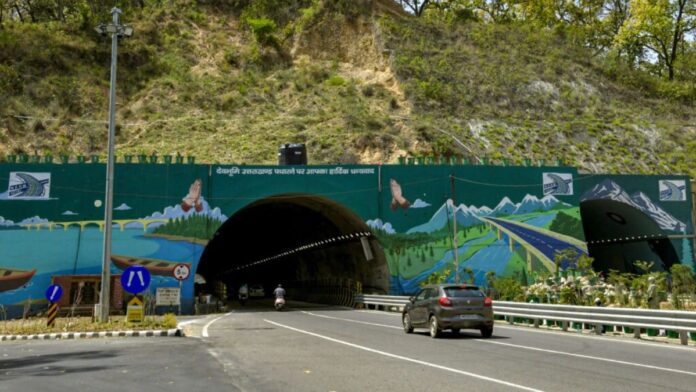
Equally significant is the Dat Kali Tunnel in Dehradun, a 340-metre-long structure designed to ensure smooth transit through hilly terrain. Equipped with advanced lighting, ventilation and surveillance systems, the tunnel eliminates the need for vehicles to navigate narrow, winding mountain roads, enhancing both safety and travel speed.
Beyond these, the expressway includes:
- 113 underpasses for uninterrupted traffic flow
- 5 railway overbridges
- Around 76 kilometres of service roads to separate local and long-distance traffic
- Multiple entry and exit points to improve accessibility
These features collectively ensure that the highway is built not just for speed, but also for safety and efficiency.
Boost to Tourism and Char Dham Connectivity
The timing of the inauguration is particularly significant, coming just ahead of the Char Dham Yatra. The expressway connects to the Char Dham Highway via Haridwar, making it a critical route for pilgrims.
Improved connectivity is expected to give a major push to tourism in Uttarakhand. Destinations such as Dehradun, Haridwar, Rishikesh and nearby hill stations will become far more accessible for travellers from Delhi and the National Capital Region.
According to TOI, the expressway is likely to play a key role in promoting tourism, especially with faster and more reliable access to hill destinations. The easier connectivity will allow tourists to plan shorter, more frequent trips, thereby increasing footfall and boosting local businesses.
Economic Ripple Effect Across States
Beyond tourism, the expressway is expected to trigger widespread economic benefits across Delhi, Uttar Pradesh and Uttarakhand. Improved road connectivity will streamline logistics, reduce transportation costs, and enable faster movement of goods. As TOI reported, the project will “enhance trade, generate employment, and support economic growth across multiple states”.
The expressway could also lead to the development of new economic hubs along the route, particularly benefiting Uttarakhand’s agricultural and small business sectors.
The construction itself has already involved large-scale investment in land acquisition, advanced engineering and environmental safeguards, underlining the government’s broader push towards infrastructure-led growth.
Cost For Commuters
While the expressway promises speed and comfort, it will come at a price. Reports suggest that toll charges for cars could be around Rs 670-675 for a one-way journey, with a round trip within 24 hours estimated at over Rs 1,000.
Despite the relatively high toll, the significant savings in time and fuel, along with a smoother travel experience, are expected to make the route attractive for regular users. The expressway will be fully FASTag-enabled, ensuring seamless digital toll payments and reducing stoppage time at plazas.
From reducing travel time and boosting tourism to enabling economic growth and incorporating eco-sensitive design, the Delhi-Dehradun expressway project stands as a model for future highway development in the country.
April 13, 2026, 18:42 IST
Read More