


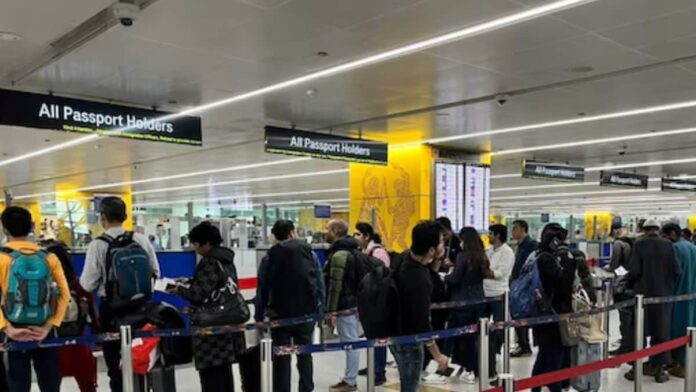

Karnataka Minister for Infrastructure M B Patil announced on Sunday that a meeting will be held shortly to determine the site of the city’s proposed second airport.
According to him, the government will weigh two key factors before making a final decision: the volume of passengers and the airport’s connectivity to the current Kempegowda International Airport (KIA).
“Areas like Sarjapura and Kanakapura Road are strong contenders if we prioritise passenger load.” However, Tumkur and Dabaspete will take precedence if access to the current airport is prioritised, according to Patil (said).
“The chief minister will further evaluate these factors and they will be considered in the upcoming departmental meeting. He informed reporters that the issue will also be discussed in the cabinet meeting.
The Bangalore International Airport Limited (BIAL), the company that operates the Kawasaki Industrial Area, and I have an exclusivity agreement that prohibits the construction of another airport within a 150-kilometer radius. This agreement expires in 2032, although it may still be possible to build a new airport by 2033.
Speaking about the length of time needed for land acquisition and landowner compensation, the minister stated that the government has started the planning process.
“In Mumbai, the distance between the two airports is 36 kilometres,” he remarked, emphasising how major cities like New York and London have many airports close by. Patil stated that it is necessary to investigate whether the exclusivity deal with BIAL applies in this case with reference to the Tamil Nadu government’s decision to construct an airport at Hosur.
According to the minister’s office, KIA handled over 4,00,000 tonne of cargo and 37.5 million passengers last year, making it the third busiest airport in the nation, after Delhi and Mumbai.
According to its current projections, the airport will handle its maximum amount of cargo by 2040 and its peak number of passengers by 2033.