



Last Updated:
Real-world testing reveals that dashboard trip computers are regularly overoptimistic, routinely overstating fuel economy by 5% to 15%




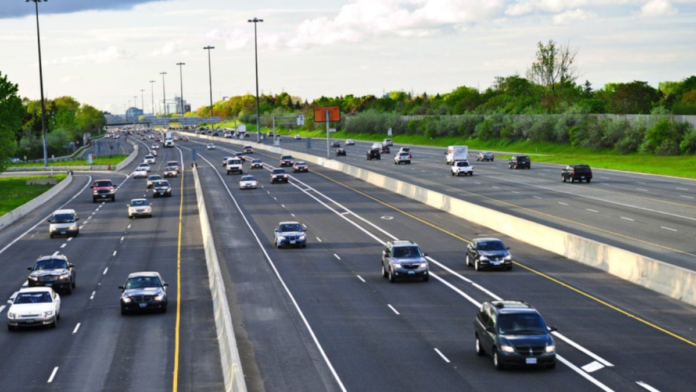
Your car does not actually measure the liquid fuel flowing from the tank to the engine. There is no physical flow meter installed in the fuel line of standard passenger cars. (Representational image)
Drivers love chasing a good number on the dashboard. Seeing a flattering fuel efficiency figure of 18 or 20 kilometres per litre (kmpl) brings a quick sense of satisfaction. However, that digital readout is often a polite fiction.
In the automotive world, this discrepancy is known as the “5 Kmpl Illusion”. Real-world testing reveals that dashboard trip computers are regularly overoptimistic, routinely overstating fuel economy by 5% to 15%.
The Fuel Chemistry Gap: Inside India’s Ethanol Debate
This digital inaccuracy has been pushed into the spotlight by India’s rapid rollout of E20 fuel (petrol blended with 20% ethanol). While the government champions the mandate as a massive win for reducing crude imports and supporting local farmers, it has sparked a quiet revolt among motorists.
The friction lies in a simple scientific reality: ethanol has roughly one-third lower energy density than pure petrol. Real-world tests show that switching to E20 causes a minor but noticeable drop in actual mileage—roughly 3% to 6%. However, because your car’s dashboard computer is programmed with factory-standard assumptions, it often fails to account for this fuel chemistry gap. You end up burning more fuel to cover the same distance, even though your screen insists your mileage is as stellar as ever.
The Pulse Rate Guesswork
Your car does not actually measure the liquid fuel flowing from the tank to the engine. There is no physical flow meter installed in the fuel line of standard passenger cars.
Instead, the Engine Control Unit (ECU) calculates fuel economy through maths and estimations:
- The Pulse Width Method: The computer tracks how many milliseconds the fuel injectors remain open.
- The Mathematical Assumption: By multiplying this “injector pulse width” by the fuel system’s fuel pressure and vehicle speed, the computer estimates how much fuel should have been sprayed.
This method assumes ideal conditions that rarely exist on the road.
Why the Maths Fails in the Real World
Beyond the chemical differences of blended fuels, several physical variables constantly throw off the computer’s calculated estimations:
- Carbon and Wear: Over time, fuel injectors accumulate carbon deposits. These tiny clogs restrict actual fuel flow, forcing the ECU to hold the injectors open longer. The computer assumes more fuel went into the engine than actually did.
- Physical Alterations: Swapping to aftermarket tyres or driving with under-inflated tyres changes the rolling circumference. This skews the speed sensor readings, distorting the “kilometres” part of the kmpl equation.
The Old-School Litre-to-Distance Audit
If you want to find your vehicle’s true fuel economy and bypass the dashboard’s software assumptions, rely on the physical fuel pump instead.
1. Fill and Reset: At the petrol station
Fill the fuel tank completely until the pump nozzle clicks off for the first time. Reset your trip odometer to zero.
2. Drive Normally: Across several days
Drive your car through your normal commute until the fuel level is low. Avoid altering your driving style.
3. Refill and Record: Using the same pump
Return to the same pump if possible. Fill the tank completely until the first click. Note down the exact number of litres added and the trip odometer reading.
4. Do the Maths: Calculate real kmpl
Divide the kilometres driven by the litres of fuel added. Compare this final number to your dashboard’s average display.
E20 fuel can lead to a minor decrease in car mileage, estimated between 2% to 6%. While dashboard computers may not always reflect this change accurately, real-world tests and government statements indicate a slight reduction in fuel efficiency.
About the Author

Pathikrit Sen Gupta is a Senior Associate Editor with News18.com and likes to cut a long story short. He writes sporadically on Politics, Sports, Global Affairs, Space, Entertainment, And Food. He tra…Read More
Read More