


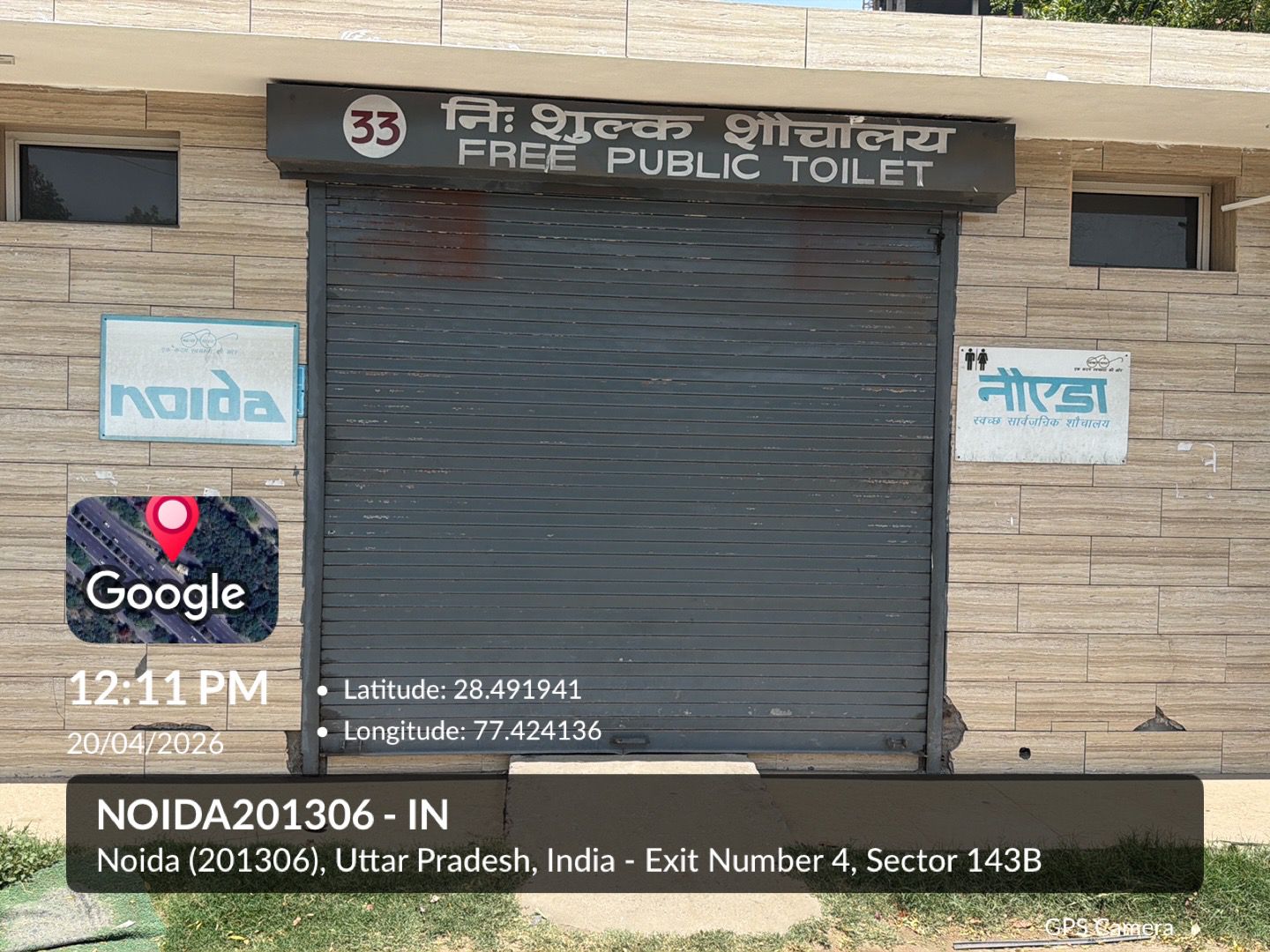
Noida: Concerns are mounting among residents over the demolition of several public toilets across sectors of Noida, raising broader questions about urban planning, financial accountability and the effective use of taxpayers’ money. Structures built with public funds just a few years ago are now being removed or demolished in the name of development and administrative requirements, sparking public debate over governance and long-term planning.
The issue has now moved beyond the mere absence of public amenities. Residents are questioning whether adequate planning, technical evaluation and future infrastructure projections were considered before these facilities were constructed.
Toilets built under the “Swachh Noida, Clean Noida” campaign
During the tenure of former Noida Authority CEO Ritu Maheshwari, a large number of public toilets were constructed across the city under the “Swachh Noida, Clean Noida” campaign. The initiative was presented as a major step toward improving urban sanitation and public convenience.
The facilities were intended to serve residents, women, senior citizens, labourers, rickshaw drivers, pedestrians and visitors using public spaces across the city. At the time, the project was promoted as part of Noida’s vision for a modern and citizen-friendly urban infrastructure system.
However, the recent demolition of several of these structures has now led citizens to question the planning process behind the projects.
Questions over planning and feasibility
Residents argue that if structures built with public funds are being removed within a short period, then the planning and approval process itself must be examined.
Several key questions are now being raised:
- Was the location selection based on proper scientific and feasibility studies?
- Were future road widening, metro expansion, green belt development and traffic management plans considered beforehand?
- Was any long-term utility assessment conducted before construction?
- If the original planning was sound, why has demolition become necessary now?
Citizens believe these questions require clear public answers from the authorities.
Concerns over maintenance and monitoring failures
Over the past few years, complaints regarding the poor maintenance of several public toilets have surfaced repeatedly. Residents from multiple sectors alleged that many facilities lacked regular cleaning and proper upkeep.
There were also allegations that some public toilets were being misused for unauthorised activities, including car washing and commercial operations.
Residents are now questioning:
- Where was the monitoring mechanism?
- Were responsible officials held accountable?
- Who was responsible for protecting and maintaining these public facilities?
Many citizens believe that inadequate monitoring and maintenance may have contributed to the deterioration and eventual demolition of these structures.
Public money and financial accountability under scrutiny
The biggest concern among residents revolves around financial accountability. Citizens argue that demolishing publicly funded infrastructure within a few years reflects poor utilisation of taxpayer money.
Residents are demanding transparency regarding:
- The total expenditure incurred on the construction of these public toilets.
- The cost involved in the demolition process.
- Whether alternatives such as repair, redevelopment or improved management were considered before demolition.
- Whether any independent technical assessment was conducted before taking demolition decisions.
Public infrastructure projects must include long-term planning and accountability mechanisms to avoid repeated financial losses.
Residents
Impact on women, senior citizens and workers
Public toilets are not merely physical structures but an essential part of public health, sanitation, women’s safety and human dignity.
Experts
The absence of adequate public sanitation facilities disproportionately affects women, senior citizens, labourers, persons with disabilities and economically weaker sections.
Residents are therefore asking:
- Have alternative facilities been arranged where old toilets were removed?
- What is the current public sanitation policy for the city?
- What is the present status of the “Swachh Noida, Clean Noida” campaign?
Residents seek transparent public clarification
Citizens are demanding that the Noida Authority publicly clarify all decisions related to the construction and demolition of these facilities.
Key demands include:
- Full transparency regarding the expenditure of public funds.
- Accountability for alleged negligence in maintenance and monitoring.
- Public disclosure of long-term urban infrastructure planning.
- Greater public participation in development decisions.
- Improved transparency, quality control and monitoring in future public utility projects.
Larger debate on sustainable urban development
Residents say that development cannot be limited to repeated cycles of construction and demolition. Sustainable urban development requires long-term planning, financial responsibility, administrative accountability and preservation of public trust.
Citizens of Noida now expect the authority to present a clear and transparent position on the matter so that future public infrastructure projects are planned with greater responsibility, efficiency and public participation.