


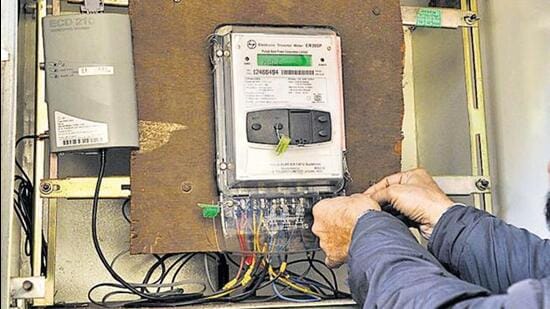

With the plan to roll out smart prepaid electricity meters in Gautam Budh Nagar, the power department has begun issuing detailed clarifications on how the new system will impact billing, consumption tracking and disconnections, officials said on Tuesday.

Officials said a key change for consumers will be the visibility of actual consumption patterns, which may differ from earlier bills that were sometimes based on estimates or delayed readings.
To be sure, the roll-out, which is still at an initial stage, has currently been paused to address the concerns of residents, officials said.
The smart meter system shifts electricity billing to a prepaid model, where consumers recharge in advance and usage is deducted in real time — similar to mobile services. The move is aimed at eliminating manual meter readings and estimated billing, officials said.
“Smart meters record electricity usage with precision and in real time. There is no change in tariff. However, in some cases, earlier unbilled or under-recorded consumption may reflect once accurate readings are captured,” said Sanjay Kumar, chief engineer, Paschimanchal Vidyut Vitran Nigam Limited (PVVNL, Noida zone).
Kumar said the system also allows consumers to closely monitor their electricity usage. “Consumers can track their daily consumption through mobile applications. The system shows how much electricity was used even on the previous day, which helps people understand and manage their usage better,” he said, adding that feedback from users has largely been positive.
However, residents’ groups said the transition has not been seamless on the ground. “The implementation was flawed initially. There was no proper awareness about the prepaid system or how consumers were supposed to manage recharges,” said K K Jain, general secretary, Federation of Noida Residents Welfare Associations (FONRWA).
According to departmental guidelines seen by HT, unitsof electricity that were consumed but not billed earlier — referred to as “stored readings” — are adjusted when the new system becomes operational, which can impact initial billing.
Officials also said that, after installation, a quality check and data synchronisation process of up to two weeks is carried out, during which billing may temporarily continue under the earlier system before switching fully to prepaid mode.
On disconnection concerns, discom officials said multiple safeguards have been built into the prepaid model. Consumers receive alerts at different balance thresholds and are provided a grace period along with emergency credit before any disruption in supply.
Residents, however, flagged concerns over how this has played out in practice. “People were caught off guard. In several cases, electricity supply was cut automatically when balance ran out, without adequate awareness or preparedness,” Jain further said.
In response, Kumar said, “There are adequate consumer safeguards. Alerts, grace periods and emergency credit ensure that supply is not cut off abruptly. The system also enables users to monitor daily consumption, receive SMS alerts, and recharge through mobile apps and digital payment platforms.”
Addressing concerns over whether the transition is optional, Kumar said the roll-out is part of a broader national plan. “This is a Government of India initiative to move towards a smart grid system. As the grid becomes smarter, installation of smart meters will be necessary in the coming period,” he said.
“At present, the work of installing smart meters has been put on hold. There is no immediate deadline for resuming installations,” Kamar said, adding that the pause is aimed at addressing consumer concerns.
“The advisory that has been issued is primarily for consumers where meters have already been installed, so that their doubts can be addressed. Once people are more aware and comfortable with the system, the process will be resumed,” he added.
In Noida zone, the progress so far remains limited. “The roll-out is still at an initial stage. Roughly 8–9% of the targeted installations have been completed so far,” chief engineer, Kumar said.
Resident bodies said while the move has long-term benefits, execution remains key. “It is a progressive move from the government’s side, but there are practical challenges that need to be addressed,” said Nikhil Singhal, president, Noida Highrise Federation.
“A large number of residents, especially senior citizens, are not tech-savvy and find it difficult to manage frequent recharges,” he added. “If implemented properly, it can improve transparency and give consumers better control over their electricity usage.”
Officials reiterated that replacement of existing meters is being carried out free of cost and urged consumers to rely only on authorised channels for payments and updates.
The clarifications come even as the state government had recently put the wider roll-out of smart meter replacement under review, with officials maintaining that consumer awareness remains key as the transition progresses.