



Last Updated:
Ganga Expressway opens with plans to cut travel time, boost industry and attract Rs 46,660 crore in investment. The corridor will also feature new toll network across 12 districts




With infrastructure and industrial planning progressing together, the Ganga Expressway is being positioned as a transformative corridor for Uttar Pradesh.
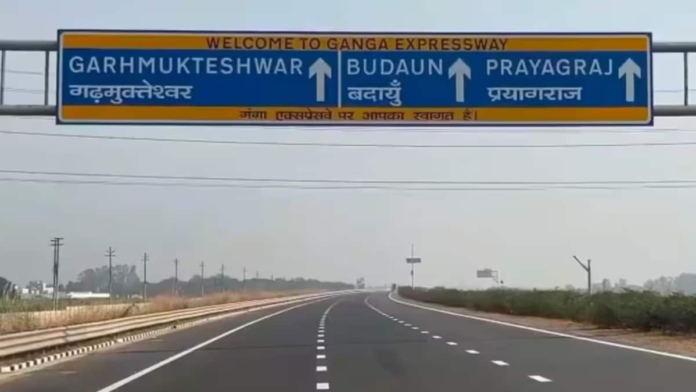
Uttar Pradesh’s ambitious 594-km Ganga Expressway, one of India’s longest access-controlled highways, is set to be dedicated to the nation by Prime Minister Narendra Modi in Hardoi on April 29, marking the formal launch of a project being positioned not just as a transport corridor but as a major industrial and logistics backbone.
Designed as a six-lane expressway, expandable to eight lanes in the future, the corridor will connect Meerut in western Uttar Pradesh to Prayagraj in the east, significantly improving both passenger mobility and freight movement across the state.
Beyond reducing travel time, the expressway is being developed as a large-scale manufacturing and logistics corridor, with investment proposals worth Rs 46,660 crore already lined up.
Expressway-Cum-Industrial Corridor Vision
The Uttar Pradesh government is positioning the Ganga Expressway as more than a road project; it is being envisioned as an expressway-cum-industrial growth corridor aimed at accelerating long-term economic development.
According to reports, the project is being spearheaded by the Uttar Pradesh Expressways Industrial Development Authority (UPEIDA) under an Integrated Manufacturing and Logistics Cluster model.
As part of this plan, 12 industrial nodes will be developed across 12 districts along the route, with 6,507 acres already identified for industrial clusters.
Authorities have received 987 expressions of intent from investors across sectors including:
- Manufacturing
- Warehousing
- Logistics parks
- E-commerce supply chains
- Agro-processing
Officials expect these investments to help lower logistics costs, improve supply chain efficiency and create a strong industrial ecosystem along the corridor.
Industrial Growth To Reach Underserved Regions
The corridor is also being seen as a tool for balanced regional development. Districts such as Hardoi, Unnao, Rae Bareli and Pratapgarh, traditionally considered less industrialised, are expected to witness increased economic activity, infrastructure growth and employment opportunities.
Each industrial node is being planned according to the local industrial base and geographic strengths of the district, with the aim of creating a continuous economic belt linking western and eastern Uttar Pradesh.
Among the proposed hubs, Bulandshahr is expected to host the largest cluster, spread over 2,798 acres, while major nodes are also planned in Hapur, Amroha, Sambhal, Badaun and Shahjahanpur.
Industry representatives say the project could reshape Uttar Pradesh’s economic trajectory by linking production centres to markets more efficiently and positioning the state as a major manufacturing destination.
Cuts Travel Time By Nearly Half
One of the biggest advantages of the Ganga Expressway will be a sharp reduction in travel time. At present, road travel between Meerut and Prayagraj takes around 12 hours. Once operational, the same journey is expected to be completed in six to eight hours, substantially improving movement of both goods and passengers.
The expressway is also expected to strengthen direct high-speed connectivity from the National Capital Region, while supporting sectors such as trade, agriculture, tourism and industrial development.
Route Across 12 Districts
The Ganga expressway begins near Bijauli village in Meerut and ends at Judapur Dandu village in Prayagraj, passing through 12 districts:
- Meerut
- Hapur
- Bulandshahr
- Amroha
- Sambhal
- Badaun
- Shahjahanpur
- Hardoi
- Unnao
- Rae Bareli
- Pratapgarh
- Prayagraj
Officials say the corridor will reduce transit delays and strengthen links between production hubs and markets.
Two Main Toll Plazas, Charges At 19 Entry-Exit Points
Alongside industrial development, authorities have also outlined the tolling structure for the expressway.
The corridor will have:
- Two main toll plazas
- 19 entry and exit points across the 12 districts where toll charges will also apply
Under the project structure, toll collection will be managed by the concessionaire for 30 years through designated plazas and access points. Officials said toll collection is expected to begin from May 1. While final toll rates are yet to be officially announced, estimates suggest:
- Cars may be charged around Rs 2.55 per km, or roughly Rs 1,515 for the full stretch
- Small commercial vehicles may need to pay around Rs 2,405
- Buses and trucks could face toll charges up to Rs 4,840
Built Under DBFOT Model
The Ganga expressway has been developed under the Design, Build, Finance, Operate and Transfer (DBFOT) model, with provision for expansion to eight lanes in the future.
Under this framework, the concessionaire will operate and collect toll over the concession period before transferring the asset back.
Adani And RB Infra Built Key Sections
Construction of the expressway has been shared among major developers. According to a report in DNA India, Adani Enterprises Ltd built nearly 464 km, roughly 80% of the project, covering the stretch from Badaun to Prayagraj, divided into three sections:
- Badaun-Hardoi (151.7 km)
- Hardoi-Unnao (155.7 km)
- Unnao-Prayagraj (157 km)
The Meerut to Badaun section was developed by RB Infra. Authorities have already carried out trial runs and successfully tested toll systems ahead of full operations.
A Logistics And Manufacturing Hub In The Making
With infrastructure and industrial planning progressing together, the Ganga Expressway is being positioned as a transformative corridor for Uttar Pradesh.
Officials believe the project could reduce logistics costs, attract large-scale manufacturing investment, create jobs across regions and strengthen the state’s role in national supply chains.
With a high-speed corridor, industrial clusters, a major toll network and nearly Rs 46,660 crore in investment proposals already in play, the Ganga Expressway is being seen as a project that could redefine both connectivity and economic growth in Uttar Pradesh.
Uttar Pradesh, India, India
April 27, 2026, 15:28 IST
Read More