



Last Updated:
Bengaluru Traffic Relief: BDA plans a 1.6 km four-lane elevated corridor worth Rs 420 crore to ease Hebbal-Mekhri congestion, with completion targeted in 18 months



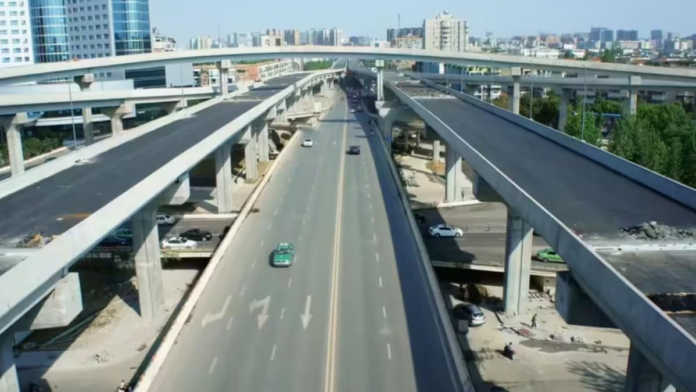
The new flyover aims to eliminate the persistent bottleneck at Mekhri Circle, improving traffic flow and reducing travel time. (Representative Image)
In Bengaluru, traffic congestion continues to be a major concern for daily commuters, with the Hebbal stretch remaining one of the most problematic zones. The Hebbal Flyover, a crucial link between the city centre and the airport, has long struggled with heavy traffic volumes, frustrating motorists.
In an earlier attempt to ease congestion, an additional ramp was constructed at the flyover. However, instead of resolving the issue, it merely shifted the bottleneck further ahead. Commuters now face even worse delays near Mekhri Circle, where traffic pressure has intensified.
To address the issue more effectively, the Bangalore Development Authority (BDA) has proposed a major infrastructure upgrade. The plan involves constructing a 1.6-km-long, four-lane elevated corridor at an estimated cost of Rs 420 crore.
The tender for the project was floated on March 26, marking the second such attempt in four months. Although an earlier tender was scheduled around December 25, 2025, certain technical factors have accelerated the process this time.
Route And Design Details
The proposed elevated corridor will begin near the UAS staff quarters and extend up to Mekhri Circle. A key feature of the project is the development of a raised rotary junction at Mekhri Circle to streamline traffic movement.
Additionally, two down-ramps are planned to improve connectivity for commuters travelling from Yeshwanthpur towards Jayamahal. One ramp will lead towards Yeshwanthpur via CV Raman Road, while the other will cater to vehicles heading towards Jayamahal.
To further optimise traffic flow, modifications have been made to the alignment after the Raman Research Institute gate. The down-ramp towards Yeshwanthpur has been extended to minimise congestion and ensure smoother vehicular movement.
Integration With Future Infrastructure
The project design has also taken into account the proposed East-West elevated corridor, ensuring compatibility with future developments. Notably, the plan does not require any additional land acquisition, which is expected to speed up execution.
Clearances have already been secured from key defence establishments, including the Indian Air Force Training Command and the Parachute Regiment, both of which have facilities along Bellary Road.
Despite the presence of two existing grade separators along the route, authorities are also considering a small tunnel near Hebbal as a long-term solution to future traffic demands.
Metro Connectivity And Timeline
Another important aspect is the planned Namma Metro Red Line, which will pass through this stretch. As a result, the project will require approval from central authorities before execution.
The BDA has set a target to complete the elevated corridor within 18 months from the date of awarding the contract. Once operational, the project is expected to significantly ease travel between North Bengaluru and the city centre.
Expected Impact On Commuters
The new flyover aims to eliminate the persistent bottleneck at Mekhri Circle, improving traffic flow and reducing travel time. It is also expected to lower fuel consumption by minimising idle time in congestion.
If completed as planned, the project could mark a significant step towards improving urban mobility and supporting Bengaluru’s growth as a modern, infrastructure-ready metropolis.
Bangalore, India, India
April 07, 2026, 15:15 IST
Read More