


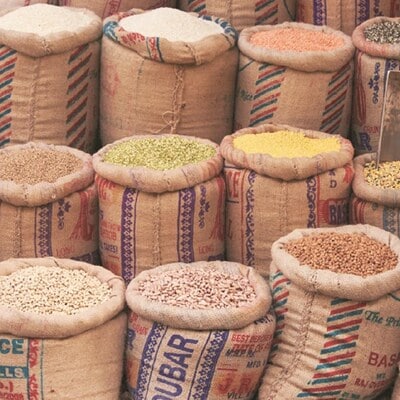

India may import 4-4.5 million tonnes of pulses this fiscal year, down from the highest level in over five years of 4.7 million tonnes in FY24, according to Bimal Kothari, chairman of the India Pulses and Grains Association (IPGA), who made the announcement here on Friday. This is because of a good monsoon and increased domestic production.
Speaking to media outside the “Bharat Dalhan-2024” pulse seminar was Kothari.
Experts stated that unless the current rules are adjusted, the overall import of pulses would increase to about 8–10 mt in the next five years, even though imports this year might decrease compared to FY24.
It is not possible to achieve self-sufficiency in the production of pulses by “empty” phrases. Renowned agricultural economist Ashok Gulati, a Distinguished Professor at the Indian Council for Research on International Economic Relations (ICRIER), stated, “We need to work towards that through concerted policy prescription.”
Speaking at the seminar, Gulati suggested that policies aimed at increasing the output of paddy be reversed and that farmers in areas like Punjab be given a five-year subsidy of Rs 39,000 per hectare to switch from paddy to pulses.
He suggested that guaranteed procurement be added to the subsidies in order to incentivise farmers to switch from water-guzzling, overly grown paddy to more in-demand pulses.
In the meantime, IPGA insisted that the government create a long-term strategy for the Rs 2.5 lakh crore pulse market, citing policy fluctuations as detrimental to the interests of all parties involved. It also called for import taxes to be applied to yellow peas.
According to Kothari, 1.6 mt of “masoor dal” were imported into the nation in FY24. He insisted, “We only need one million tonnes of masoor dal imports.”
According to the IPGA chairman, yellow pea imports may decline from 2023–2024. He stated, “India imported a record 2 mt of yellow peas in FY24—the first time imports have been permitted—and an additional 1-1.5 mt will arrive in the upcoming three to four months.”
According to Kothari, pulse prices in wholesale marketplaces have decreased over the past month and are predicted to continue declining. In the last month, wholesale markets have seen a 20/kg decrease in the price of Tur. “Pulses prices will not increase this year, rather they will keep falling,” added Kothari.