


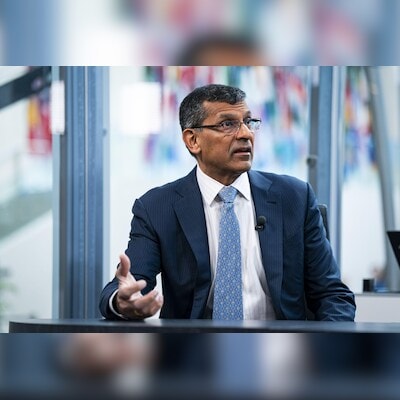

To achieve sustained economic growth and create jobs, India should prioritise the development of its service sector over the growth of manufacturing, according to former governor of the Reserve Bank of India (RBI) Raghuram Rajan. Rajan made the case that manufacturing is not the “holy grail” for India’s economic growth during his speech at the Annual World Bank Conference on Wednesday.
Rajan emphasised that the manufacturing sector is confronted with challenges because of restricted export absorption and fierce competition from nations like China, Vietnam, Indonesia, and Mexico, which have greater capital than India and offer cheaper labour than the US.
“Climbing the manufacturing ladder is harder politically and economically,” he continued.
In contrast to manufacturing, which has a far lower value addition, he claims that services and services incorporated in manufacturing have higher value contributed in value chain activities. “Intellectual property contributes significantly to value addition in services, not physical production. The potential for services to be at the forefront of the economy must be taken into consideration, he stated.
In order to attain better results, the former governor of the Reserve Bank of India went on to say that India should concentrate enhancing healthcare and education services through decentralisation and local empowerment, putting more emphasis on human capital than just physical capital.
He noted that in order for India to seize chances with high value addition, it must promote innovation and creativity.
Rajan says the Indian government should stop focusing only on high-end jobs and instead concentrate on creating jobs at all levels. In his most recent remarks, Rajan stated, “More employment are needed.
Rajan emphasised that by upskilling people for the occupations that already exist and offering “last mile remedial training,” India must address both the availability of jobs today and in the future. He emphasised the significance of investing in training courses for future employment chances in addition to offering employment opportunities that align with people’s current skill sets.