



Last Updated:
The US Department of Homeland Security says the move will redirect staff to core operations — meaning longer waits for some travellers.




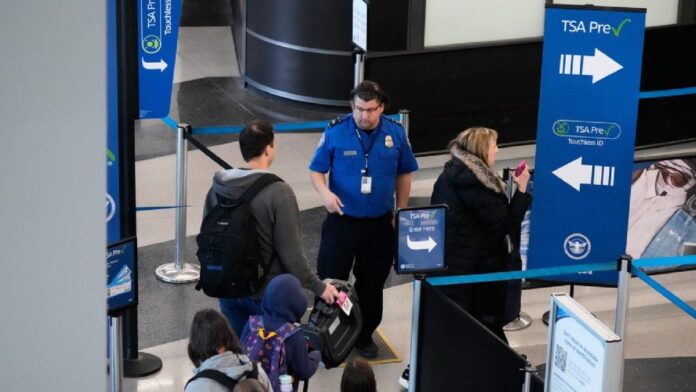
A Transportation Security Administration officer works at a security checkpoint at O’Hare International Airport, in Chicago. (IMAGE: AP PHOTO)
The US government shutdown is set to affect airport travel, with fast-track security and entry programmes temporarily suspended starting Sunday, February 22 at 6am Eastern Time, a move that could mean longer queues for some passengers flying into or out of the country.
The US Department of Homeland Security (DHS) said it will pause TSA PreCheck and Global Entry as part of emergency measures to redirect staffing during the funding lapse, a development first reported by The Washington Post.
DHS Secretary Kristi L. Noem said the agency is “making tough but necessary workforce and resource decisions” while prioritising the broader travelling public at airports and ports of entry.
For travellers, especially international passengers and frequent flyers who rely on expedited screening, the change could mean losing access to dedicated fast-track lanes and facing regular security and immigration checks.
What Happens During The Suspension?
Starting Sunday morning, the DHS will temporarily stop operating TSA PreCheck and Global Entry screening services, according to the department. The agency is also suspending airport police escorts for members of Congress and other expedited services, The Washington Post reported.
The Federal Emergency Management Agency (FEMA) will halt all non-disaster response work to prioritise emergencies, Noem said, citing an incoming winter storm.
Officials say the measures are designed to shift limited staffing toward essential security and travel operations while funding remains stalled.
Why The Shutdown?
The disruption stems from a funding standoff after Congress failed to approve additional money for DHS before its budget expired on February 14.
Democrats have sought new restrictions on federal agents following the fatal shootings of two US citizens in Minneapolis last month, demanding reforms such as body cameras, judicial warrants for raids and limits on operations at sensitive sites like schools and churches.
The White House negotiated with Democratic lawmakers, but no agreement was reached before funding ran out. Congress has been on a scheduled recess, with talks continuing behind the scenes, according to The Washington Post.
This is a narrower shutdown than previous ones, affecting only DHS — about 13 percent of the civilian federal workforce, the newspaper reported.
What Is At Stake?
Despite the shutdown, agencies central to immigration enforcement — Immigration and Customs Enforcement (ICE) and Customs and Border Protection (CBP) — are expected to continue operating using funds from a previous spending law signed by President Donald Trump.
However, agencies such as TSA and FEMA are more exposed to the funding gap. DHS plans show about 91 percent of its employees would continue working without pay, with the first missed paychecks expected in early March.
Democrats say they did not intend to disrupt agencies like TSA but argue the reforms are necessary to curb aggressive enforcement tactics. Republicans, meanwhile, accuse Democrats of jeopardising national security by withholding funds.
Washington D.C., United States of America (USA)
February 22, 2026, 18:36 IST
Read More