



Last Updated:
The policy framework surrounding natural gas in India has effectively insulated CNG users from the worst of the ‘fuel shock’



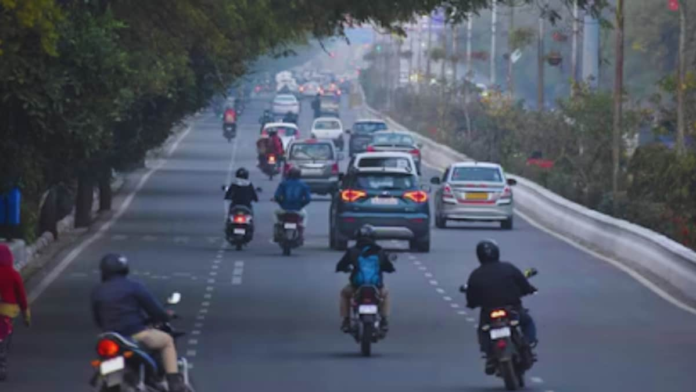
Unlike petrol, which is tied to the volatile Brent Crude index, a significant portion of India’s CNG is priced through a domestic formula linked to global gas hubs but capped by a ‘ceiling price’. Representational image
As the 2026 West Asia conflict continues to destabilise global energy markets, the ripples have reached Indian petrol pumps and kitchens. With the Strait of Hormuz facing unprecedented maritime risks, the Indian government has moved into a “strategic triage” mode to protect the economy. In this hierarchy of energy needs, the modest compressed natural gas (CNG) vehicle has unexpectedly emerged as the “VIP” of the road.
While petrol and diesel prices fluctuate wildly based on global crude benchmarks, the policy framework surrounding natural gas in India has effectively insulated CNG users from the worst of the “fuel shock“.
The Natural Gas Control Order: Priority Number One
The primary reason your CNG car is currently the most protected asset on the road lies in the government’s Natural Gas Control Order. Under this mandate, the Ministry of Petroleum and Natural Gas has established a clear “priority list” for the allocation of domestic gas. At the very top of this list sits the City Gas Distribution (CGD) sector—specifically Piped Natural Gas (PNG) for homes and CNG for transport.
In a crisis where gas supply is limited, the government diverts resources away from industrial sectors, such as fertiliser plants and power stations, to ensure that the “common man’s” commute and kitchen remain unaffected. This 100% “no-cut” priority means that even as international prices soar, the domestic gas pool is reserved primarily for the CNG tanks of taxis, autos, and private cars.
The Administered Pricing Advantage
Unlike petrol, which is tied to the volatile Brent Crude index, a significant portion of India’s CNG is priced through a domestic formula linked to global gas hubs but capped by a “ceiling price.” This administrative intervention ensures that while global gas prices might triple during a conflict, the retail price at a Noida or Delhi pump remains relatively stable.
The government’s “India First” energy policy has focused on long-term contracts and domestic production from the Krishna-Godavari basin. By relying more on indigenous gas and fixed-term imports rather than the “spot market”, the state is able to shield CNG users from the daily price revisions that haunt diesel and petrol vehicle owners. For the average commuter, this translates to a predictable monthly budget in an otherwise unpredictable year.
CNG as an Essential Service Tool
The “VIP” status is also a logistical necessity. In India’s major metropolitan hubs, the public transport backbone—including the Delhi Transport Corporation (DTC) buses and the vast fleet of auto-rickshaws—runs almost exclusively on CNG. Any disruption in supply or a massive price hike would lead to a total collapse of urban mobility and a surge in food inflation due to rising transport costs for essential goods.
By keeping CNG prices “insulated”, the government prevents a secondary inflationary spike. The car you drive is a beneficiary of this larger macroeconomic strategy; because the buses must run, your private CNG sedan gets to enjoy the same price protection and supply guarantees.
The Environmental and Economic Hedge
As the West Asia crisis forces India to accelerate its “green transition”, CNG is being viewed as the critical “bridge fuel”. The current crisis has proven that over-dependence on imported crude is a strategic vulnerability. Consequently, the push for a “gas-based economy” targets has shifted from a long-term goal to an immediate security requirement.
Investors and car buyers are noticing. While the initial cost of a CNG kit or a factory-fitted model was once seen as a hurdle, the current “fuel shock” has made the payback period incredibly short. With petrol hovering at record highs, the “VIP” treatment of CNG has turned it from an alternative choice into the most sensible financial hedge for the middle-class Indian household.
Navigating the Chokepoint
While the Strait of Hormuz remains a concern for crude oil, India’s natural gas supply is increasingly diversified. With new pipelines and Liquefied Natural Gas (LNG) terminals on the western coast receiving shipments from stable partners in the Americas and Australia, the “gas silk road” is proving more resilient than the old oil routes. As long as the conflict continues, the CNG sticker on your windshield acts as a VIP pass, granting you access to the most stable, prioritised, and cost-effective fuel in the country.
March 12, 2026, 19:45 IST
Read More