


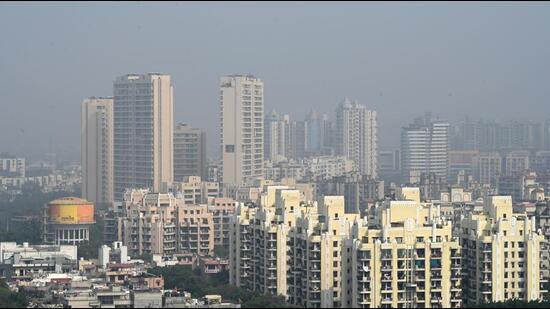
Noida : A review meeting on the PM Surya Ghar Muft Bijli Yojana was held in Greater Noida by the Uttar Pradesh New and Renewable Energy Development Agency, bringing focus to the implementation of solar energy in group housing societies. The meeting surfaced multiple operational and policy-level concerns tied to adoption at the society level.
Representation concerns raised by Naresh Nautiyal
Former MP candidate Naresh Nautiyal attended the meeting, stating he was representing residents across group housing societies in Gautam Buddh Nagar. He emphasized that despite thousands of such societies in the district, most AOA and RWA representatives were not adequately included.
Nautiyal questioned officials, including the deputy registrar, on the limited participation. He pointed out that only the AOA of Supertech Captain Society was formally present, while a majority of attendees were solar vendors, with minimal representation from RWAs.
He argued that for schemes like rooftop solar, which directly impact residential societies, it is essential to include AOA and RWA stakeholders so that ground-level challenges are accurately communicated to authorities.
Practical hurdles in solar adoption
Vendors present in the meeting highlighted multiple bottlenecks in implementing solar systems in societies. These included procedural issues with the electricity department, delays in technical approvals and complications related to property ownership.
A key concern raised was that in many societies, electricity meters are registered in the name of individual residents or builder entities. This creates complications in deploying a centralized solar system for the entire society. Additionally, access to bank loans for such installations remains limited.
Policy continuity but weak execution
Nautiyal noted that the push for solar energy is not new. He referenced the Jawaharlal Nehru National Solar Mission launched under the leadership of Manmohan Singh in 2010. He said successive governments have continued similar policies under different scheme names.
However, he stressed that effective implementation remains a concern. According to him, the government must first ensure mandatory solar installations across its own infrastructure, including offices, hospitals, banks, parks, stadiums and official residences of MPs and MLAs.
He further suggested that authorities should publicly disclose comparative data on electricity bills before and after solar installation to build trust and encourage adoption among residents.
Compliance gaps in group housing societies
Nautiyal also highlighted that most group housing societies built after 2010 were mandated to install solar panels, with builders submitting affidavits to that effect. He called for strict enforcement to ensure compliance, either by builders or AOAs.
Way forward
The meeting concluded with a consensus that a formal communication will be sent to the concerned authority, outlining the issues and proposing actionable steps to streamline solar implementation in group housing societies.
Nautiyal stated that if societies collectively adopt solar and wind energy, it would significantly reduce electricity consumption, lower bills and contribute positively to environmental sustainability.
- Delhi Plans To Put Brakes On New Petrol Two-Wheeler Registrations By 2028 Under Draft EV Policy | New-delhi-news News
 Last Updated:April 11, 2026, 19:25 IST The policy proposes that only electric three-wheelers be registered from… Read more: Delhi Plans To Put Brakes On New Petrol Two-Wheeler Registrations By 2028 Under Draft EV Policy | New-delhi-news News
 - GIMS doctors call for better hygiene as child suffers worm infection
 GREATER NOIDA: Doctors at the Government Institute of Medical Sciences (GIMS) on Saturday warned of severe… Read more: GIMS doctors call for better hygiene as child suffers worm infection
 - Antibiotics Aren't Always the AnswerSource: Centers for Disease Control and Prevention – PDFRelated MedlinePlus Pages: Antibiotics, Children’s Health, Common Cold,… Read more: Antibiotics Aren't Always the Answer
- Defying cultural differences, 13-year age gap and family doubts
 Back in 2003, Rajpal was in Canada filming ‘The Hero’. Fate (and a mutual friend) stepped… Read more: Defying cultural differences, 13-year age gap and family doubts
 - Residents allege night dumping outside House A-72 in Beta 1, Demand strict action
 Greater Noida: Cleanliness concerns have resurfaced in Sector Beta 1 after residents raised complaints against occupants… Read more: Residents allege night dumping outside House A-72 in Beta 1, Demand strict action
 - Mumbai’s Longest Metro Line Is Back! What The Proposed Kanjurmarg-Badlapur Route Means For Commuters | Mumbai-news News
 Last Updated:April 09, 2026, 15:50 IST Kanjurmarg-Badlapur Metro Line 14: For the lakhs of commuters who… Read more: Mumbai’s Longest Metro Line Is Back! What The Proposed Kanjurmarg-Badlapur Route Means For Commuters | Mumbai-news News
 - Noida: 16 arrested for targeting foreign nationals from fake call centre
 Noida: Sixteen people were arrested on Thursday for allegedly targeting foreign nationals through a Noida Sector… Read more: Noida: 16 arrested for targeting foreign nationals from fake call centre
 - Supertech Capetown : Parks and open gyms deserted, as mosquito menace sparks fear
 Noida: A growing mosquito menace in Sector 74 has forced residents to abandon public spaces, with… Read more: Supertech Capetown : Parks and open gyms deserted, as mosquito menace sparks fear
 - Residents clean Beta-1 area, Demand action from AuthorityGreater Noida: Despite repeated efforts to maintain cleanliness near Gate No. 6 of Sector Beta-1, residents… Read more: Residents clean Beta-1 area, Demand action from Authority
- Sector Beta 1 : Residents erupt over open garbage dumping, Residents demand a ₹5000 fine
 The message from Sector Beta 1 is loud and clear: enough is enough.
 - Beta 1 : Open pit sparks fear among residents, RWA flags safety lapses
 Greater Noida: A large open pit, left unattended for the past 10–15 days in Sector Beta-1,… Read more: Beta 1 : Open pit sparks fear among residents, RWA flags safety lapses