


Noida: The functioning of departments of the Noida Authority in handling complaints on the Chief Minister’s public grievance portal (IGRS) and the Prime Minister’s portal continues to raise serious questions. Despite repeated strict actions by the Authority’s CEO, including suspension of officials and withholding of salaries, there has been no visible improvement at the ground level. Complainants allege that departments are still disposing of grievances by providing incorrect, incomplete, and misleading information.
Recently, the CEO again took action against officials for failing to work on IGRS, RTI applications, and other portals, including suspending one official. Last month, the salaries of some officials were also stopped. However, even after these measures, there has been no change in how departments respond to complaints on the Chief Minister’s and Prime Minister’s portals. In many cases, replies are delayed by one to two months and when responses are finally given, they often contain incomplete or incorrect information.
Serious allegations against work circles 2 and 3
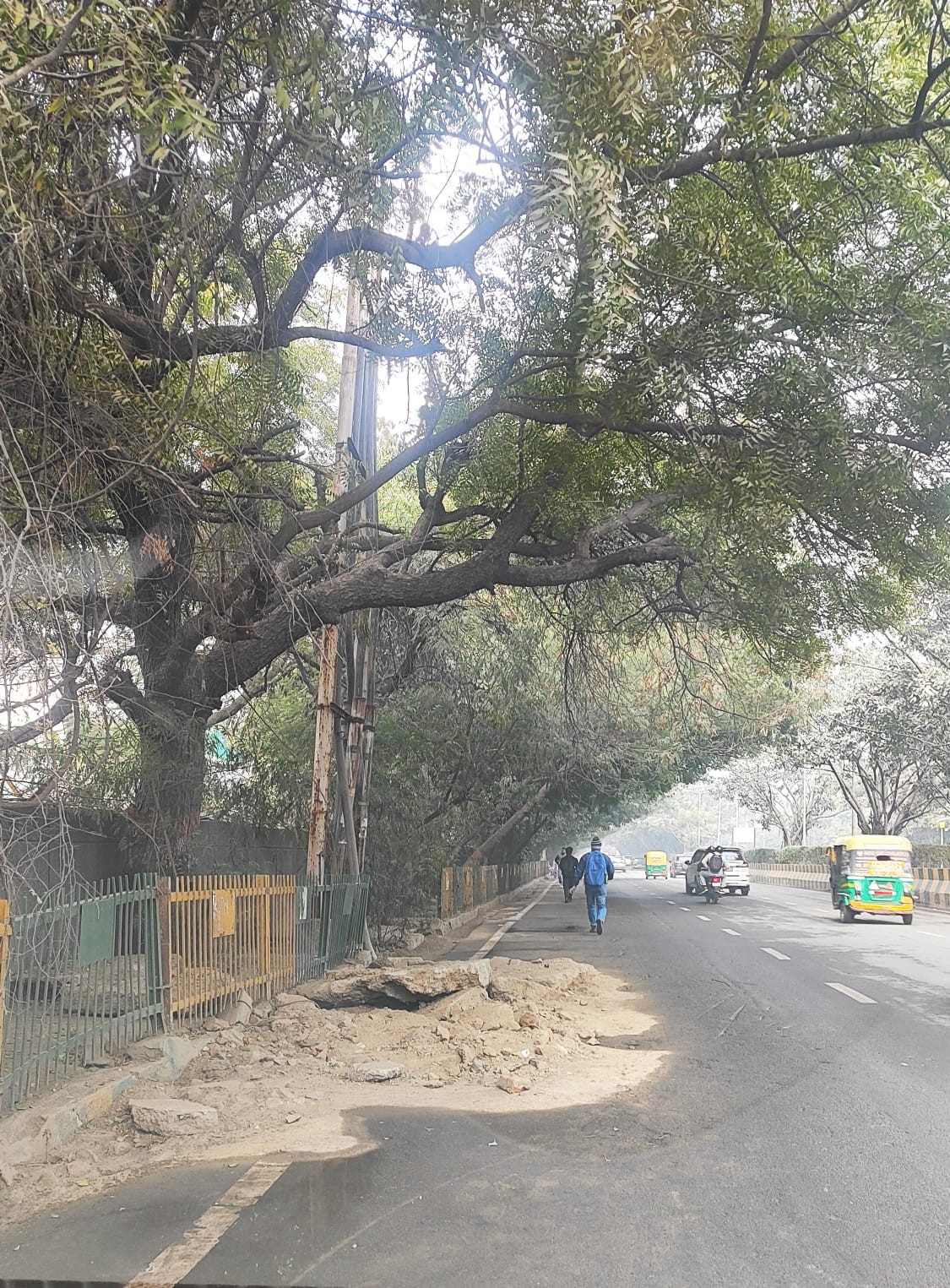
Most complaints are reportedly linked to senior managers of Work Circle-2 and Work Circle-3. The service roads on both sides of Sector 36 and Sector 32 outside the Degree College and the Cyber Police Station have been in a dilapidated condition for a long time. A complaint was filed on the Chief Minister’s portal over a month ago. In response, the concerned circle merely wrote letters to the Jal (Water) Department and treated the matter as resolved, while the road remains broken to date.
Residents allege that when the Jal Department itself digs up roads, circle officials remain silent. However, when the public raises complaints, officials complete formalities by sending letters and closing the complaints. There are numerous such examples, indicating a consistent pattern of providing incorrect and incomplete information.
Lack of monitoring at senior levels
Another major reason cited is the absence of effective monitoring of responses given on IGRS by Senior Managers, DGM (Civil), and GM (Civil) levels (Zones 1–5 and 6–10). Until accountability is fixed at the Senior Manager level, no real improvement can be expected. Even now, incomplete and misleading information continues to be submitted at this level.
Some positive updates, yet larger questions remain
According to social activist Amit Gupta, the Noida Authority has confirmed that all formalities for the Sector 76 main road Foot Over Bridge (FOB) have been completed, and construction work is expected to begin in the coming days, from Barola to Sector 78–76 near the metro station. Similarly, resurfacing work of the Sector 12–22 NTPC underpass main road is expected to begin around mid-February, with the tender to be published shortly. While these developments have come after years of follow-up, the question remains whether citizens must struggle for years for every basic civic work.
CAQM report raises further concerns
The recent inspection report by the Commission for Air Quality Management (CAQM), covering 142 roads in Noida, has also sparked debate. According to the report, high levels of dust were found on only four roads, medium levels on 24 roads, low levels on 66 roads, and no dust on 48 roads. CAQM noted that areas with high dust levels were associated with construction activity, municipal solid waste (MSW), or construction and demolition (C&D) waste, particularly under flyovers, along metro corridors and on certain arterial roads.
However, critics question how most roads could be reported as dust-free when Noida has consistently ranked among the most polluted cities in the country and residents have been deprived of clean air for nearly three months. It has also been alleged that information about the inspection appeared in newspapers on Monday morning, raising doubts over claims that it was a “surprise inspection.”
Matter to be raised before the NGT and the Supreme Court observations
RTIs have been filed to seek exact details of roads where high and medium dust levels were found, and both the inspection report and RTI responses will be placed before the National Green Tribunal (NGT) on the 13th. Meanwhile, the Supreme Court has recently come down heavily on CAQM, terming its approach towards tackling air pollution in Delhi-NCR as “unserious” and has directed it to convene meetings of domain experts and place a comprehensive report in the public domain.
Effective and transparent grievance redressal on platforms like the Chief Minister’s and Prime Minister’s portals is a key measure of administrative accountability. Mere disciplinary action on paper is not enough. Unless strict monitoring and accountability are enforced at senior levels, systemic improvement will remain elusive. For now, the situation reflects a familiar contrast “all is well” in official records, while ground realities tell a very different story.