



Last Updated:
India’s auto industry has grown from Rs 14 trillion to Rs 22 trillion in recent years, making it the third-largest globally behind the US and China




The minister emphasised that the rapid adoption of green mobility aligns with India’s ambitious goal of becoming the world’s leading automotive manufacturing hub within the next five years.
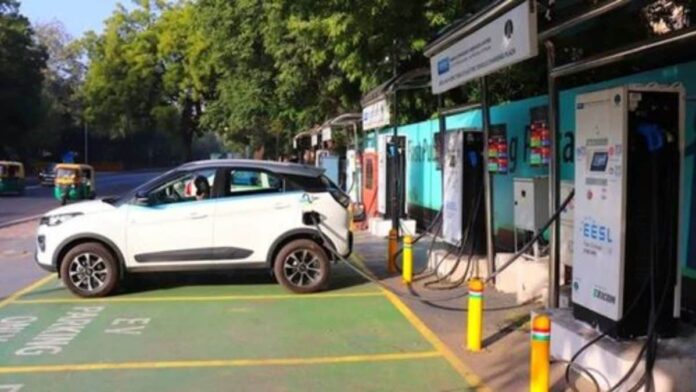
Representational image
India’s electric vehicle (EV) market is projected to reach an impressive valuation of Rs 20 trillion (Rs 20 lakh crore) by 2030, generating approximately 50 million direct and indirect jobs across the nation.
Union Minister for Road Transport and Highways Nitin Gadkari highlighted this transformative potential while speaking at a sustainability summit organised by the CII-ITC Centre of Excellence. With over 57 lakh registered EVs currently operating on Indian roads, the sector’s current market penetration sits at roughly 7 per cent, signalling vast room for expansion.
Driving Economic and Industrial Growth
The minister emphasised that the rapid adoption of green mobility aligns with India’s ambitious goal of becoming the world’s leading automotive manufacturing hub within the next five years.
Key industry metrics underscore the scale of this green transition:
- Massive Sector Expansion: India’s overall automobile industry has grown from Rs 14 trillion to Rs 22 trillion in recent years, making it the third-largest globally behind the United States and China.
- Crucial Job Generation: The projected expansion to Rs 20 trillion by 2030 is set to create 5 crore (50 million) new jobs across vehicle manufacturing, battery production, component supply chains, and charging infrastructure networks.
- High Two-Wheeler Exports: Major domestic manufacturers like Bajaj Auto and Hero MotoCorp are already leading international markets, exporting over 50 per cent of their total production volume.
Supply Deficits and Commercial Opportunities
Despite strong market momentum, the minister pointed out severe supply shortages in the public transit domain. India experiences an annual domestic demand for nearly 1,00,000 electric buses, yet existing manufacturing capacity can only produce between 50,000 and 60,000 e-buses annually.
This manufacturing gap presents an immense commercial opportunity for domestic automakers and global investors to scale up local production facilities.
Lowering Logistics Costs and Fossil Fuel Imports
Transitioning to clean mobility remains vital to cutting down India’s staggering annual fossil fuel import bill of Rs 22 trillion, which heavily drains foreign exchange reserves and drives urban air pollution.
Simultaneously, the development of expressways and dedicated freight networks has helped slash domestic logistics costs from 16 per cent down to 10 per cent of GDP, with an eventual target of reaching 8 per cent. Lowering transport expenses ensures Indian EV exports stay globally competitive while providing clean, sustainable urban transit across the country.
Quick Answers
 Ask News18
India needs to increase its domestic manufacturing of electric buses, as the annual demand is one lakh units, but current production is only 50,000-60,000 units. Additionally, a new financing scheme is being developed to offer interest relief on loans for private operators purchasing heavy electric commercial vehicles.
Ask News18About the Author

Pathikrit Sen Gupta is a Senior Associate Editor with News18.com and likes to cut a long story short. He writes sporadically on Politics, Sports, Global Affairs, Space, Entertainment, And Food. He tra…Read More
August 27, 2026, 17:31 IST
Read More