



Last Updated:
The policy proposes that only electric three-wheelers be registered from January 2027 and two-wheelers from April 2028




If implemented, Delhi would be among the first major Indian cities to set a clear timeline for phasing out petrol two-wheelers in new registrations.
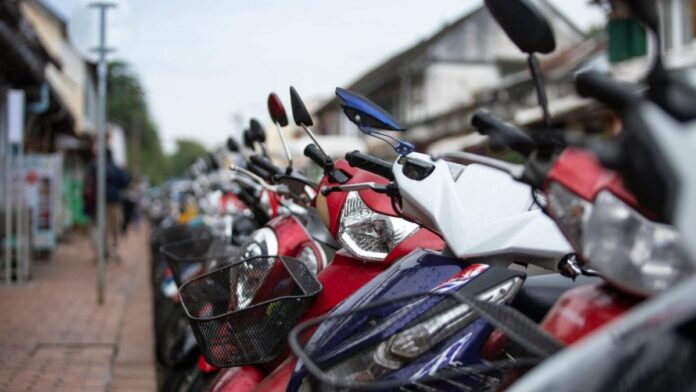
Representational image
The Delhi government has released its draft Electric Vehicle Policy 2026, proposing that only electric three-wheelers be registered from January 2027 and two-wheelers from April 2028, while phasing out CNG three-wheelers and petrol two-wheelers.
The policy stated that two-wheelers constitute approximately 67% of the total vehicle stock in Delhi, “making their rapid electrification critical for achieving meaningful reductions in vehicular emissions”.
For electric two-wheeler purchases, a scrapping incentive of Rs 10,000 will be provided for Delhi-registered BS-IV and below two-wheelers. The purchase has to be made within six months of issuance of the Certificate of Deposit (CoD) from an authorised scrapping facility.
“From April 1, 2028, only electric two-wheelers shall be permitted for new registration in the NCT of Delhi,” the draft reads.
Incentives ranging between Rs 30,000 and Rs 10,000 will also be given on the purchase of two-wheelers with ex-factory price not exceeding Rs 2.25 lakh. In the first year, Rs 30,000 will be given as incentive that will drop to Rs 20,000 the next year and Rs 10,000 the following year.
Three-wheelers
Similar incentives—ranging from Rs 50,000 to Rs 30,000—will be given for e-auto adoption in Delhi.
“From January 1, 2027, only electric three-wheelers (L5) shall be permitted for new registration in the NCT of Delhi,” the draft added.
An incentive of Rs 25,000 will be given for the scrapping of Delhi-registered BS-IV and below three-wheelers (L5M) on the purchase of a new electric vehicle under this policy.
The move marks a shift from incentives to regulatory mandates, with the government setting clear deadlines for phasing out petrol two- and three-wheelers in new registrations.
However, unlike two- and three-wheelers, the policy does not impose a similar mandate on private cars.
For non-transport electric cars below Rs 30 lakh, a scrapping incentive of Rs 1 lakh will be provided upon purchase under this policy. The incentive will be for Delhi-registered BS-IV and below cars and will be limited to the first one lakh eligible applicants under this policy.
The policy stated that all electric vehicles with ex-showroom price below or equal to Rs 30 lakh, registered in Delhi during the policy period will get 100% exemption from road tax and registration fees at the time of vehicle registration till March 31, 2030. There will not be any exemption from road tax and registration fees for electric cars with ex-showroom price above Rs 30 lakh.
Issuing the draft, the government said that the Delhi Electric Vehicle Policy 2026–2030 is planned to accelerate electric vehicle (EV) adoption, improve air quality, and create a supportive ecosystem for electric mobility.
The draft also stated that the Commission for Air Quality Management (CAQM), in its latest report about the causes for worsening AQI in Delhi-NCR, has identified vehicular emissions as the largest contributor (23% during winter) to air pollution in the National Capital Territory of Delhi.
The policy’s design signals a clear focus on high-usage vehicle segments such as two- and three-wheelers, which contribute disproportionately to urban emissions, while taking a more gradual approach towards private cars.
The policy also introduces electrification mandates for fleet operators and delivery services, effectively pushing high-mileage commercial vehicles towards EV adoption—an area often seen as critical for reducing urban emissions.
If implemented, Delhi would be among the first major Indian cities to set a clear timeline for phasing out petrol two-wheelers in new registrations.
On Saturday, the government stated that the draft Delhi Electric Vehicle (EV) Policy 2026 was issued and all stakeholders, including the general public, are invited to submit their feedback and comments within 30 days.
Suggestions and feedback can be shared on e-mail (evpolicy2026@gmail.com) or by post to Joint Commissioner (EV), Transport Department, Govt. of NCT of Delhi, 5/9 Underhill Road, Delhi-110054.
April 11, 2026, 19:19 IST
Read More