


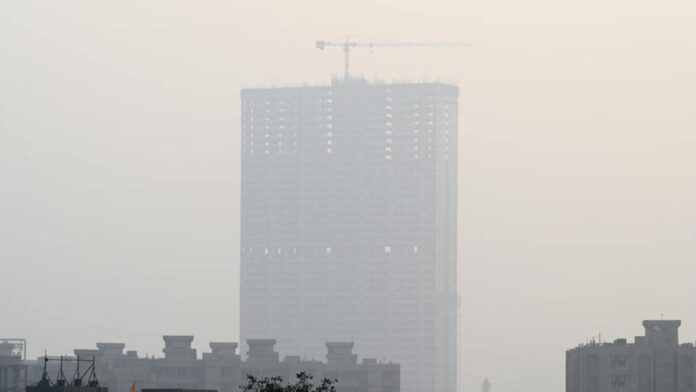

A slight improvement was observed in the pollution levels in Ghaziabad in the last year compared to previous years, suggest the official statistics of Uttar Pradesh Pollution Control Board (UPPCB).
The data show that the pollution levels in Ghaziabad improved, with majority of the days in 2023 witnessing “moderate” and “poor” category.
It the previous years, the pollution concentration of days ranged from “moderate” to “severe”.
According to the Air Quality Index (AQI) scale, readings between 0 and 50 are considered “good”, 51-100 are “satisfactory”, 101 and 200 are “moderate”, 201-300 are “poor”, 301-400 are “very poor”, and 401-500 are “severe”.
The UPPCB figures indicate that Ghaziabad city recorded 158 “moderate” days in 2023 as compared to 102 in 2022, and 100 in 2021. And the number of “poor” days declined from 87 in 2021 and 132 in 2022 to 86 in 2023.
Likewise, the number of “severe” days declined from 22 in 2021 to 2 in 2022, and 3 in 2023.
“The pollution levels have remained better in 2023 and it is largely due to enforcement activities against violators, and public awareness,” said Vikas Mishra, regional officer of UPPCB.
He said in 2023, about ₹1.43 crore worth fines were imposed on different violators. “The directions by the Commission for Air Quality Management have also impacted the pollution abatement measures in a streamlined manner,” Mishra added.
However, according to the Central Pollution Control Board data, the average PM2.5 and PM10 levels in Ghaziabad stood at 78 micrograms per cubic metre (mpcm) and average of 184.33 mpcm, respectively, and both remained higher than the respective standard limits.
The standard limit of PM2.5 is 60mpcm while it is 100mpcm for PM10.
However, Akash Vashishtha, an environment lawyer, said the enforcement activities in the city still lack sting and violations continue.
“The decline in polluted days is due to meteorological factors while local factors like bad roads, industrial pollution and vehicular emission continue to prevail,” he said.
In 2021, Ghaziabad was adjudged as the second-most polluted city in the World Air Quality Report prepared by Swiss firm IQAir. The 2022 report ranked Ghaziabad more favourably at the 11th spot.
Meanwhile, the air quality in Noida and Greater Noida cities has deteriorated at the beginning of 2024 compared to last year. But it has improved over the last four years, prior to 2023, states the Central Pollution Control Board (CPCB) data.
The air quality index (AQI) of both the cities was recorded at 301 on Tuesday (January 2). Last year, the AQI for Noida was recorded at 299, and 310 for Greater Noida on the same day.
However, prior to 2023, the AQI of the two cities constantly reeled under ‘severe’ and ‘very poor’ categories, for four consecutive years.
On January 2, 2022, the AQI of Noida and Greater Noida was 380 and 331 respectively. However, on the same day in 2021, it was 448 and 450; in 2020, it was 410 and 372, and in 2019, it was 412 and 438, respectively, according to information from the CPCB.
On January 1, 2024, the AQI of Noida and Greater Noida was 307 and 304; in 2023, it was 213 and 239; in 2022, it was 321 and 281, in 2021, it was 455 and 434; in 2020, it was 438- and 420 and in 2019, it was 408 and 421, respectively.