



Last Updated:
Delhi’s bus strike is pushing commuters towards packed Metro trains. Schools are also scrambling as transport plans face disruption




Delhi News: The absence of regular bus services placed additional pressure on the Metro network, with commuters having to contend with longer queues and crowded trains.
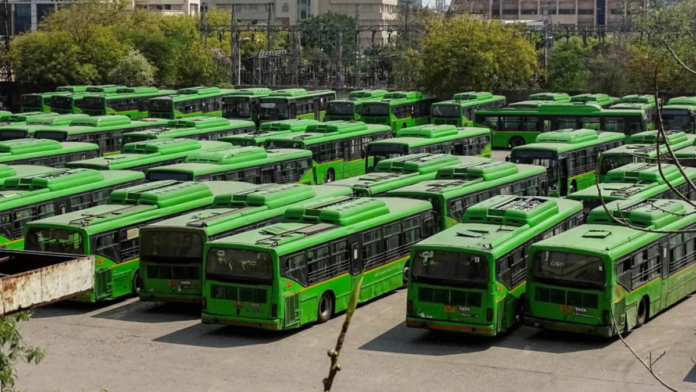
Delhi DTC Bus Strike: Delhi’s public transport system faced continued disruption on Wednesday as Delhi Transport Corporation (DTC) bus drivers and conductors went on strike for the second consecutive day, demanding higher wages, improved working conditions and social security benefits.
With a large number of DTC buses off the roads, commuters were forced to rely on alternative modes of transport. The disruption also affected school transport services, while the Delhi Metro Rail Corporation (DMRC) increased train operations to manage the additional passenger footfall.
The strike is expected to continue on Thursday, as the protesting drivers’ demands remain unresolved.
DTC Drivers Demand Higher Wages And Social Security Benefits
According to the DTC Karamchari Ekta Union, drivers and conductors operating DTC buses are currently paid a daily wage of Rs 862, which is the minimum wage fixed by the Delhi government.
The union argued that this wage is typically associated with daily-wage labourers, factory workers and employees of small companies, and questioned whether it was appropriate for licensed and qualified drivers and conductors operating large buses in a densely populated city such as Delhi.
In a statement, the union questioned whether paying drivers and conductors Rs 862 a day amounted to “bonded labour”.
The union’s president, Lalit Chaudhary, said the dearness allowance, which is revised every six months under applicable rules, had not been increased in the past one-and-a-half years.
He further said that the basic increment, due every five years, was last implemented in 2019 and had been pending since 2024.
The union’s key demands include:
- A minimum daily wage of Rs 2,000 for equal work.
- Payment for all government holidays.
- An annual bonus.
- Social security benefits, including a medical scheme.
- Wage revisions and improved working conditions.
Around 12,000 Drivers And Conductors On Strike
Delhi has approximately 6,840 DTC buses. Chaudhary estimated that around 12,000 drivers and conductors participated in the strike on Wednesday. The protesting employees, many of whom operate new electric buses, are also demanding medical facilities and overtime payments.
According to the union, agencies operating DTC buses receive payments from the government on a per-kilometre basis but are only required to pay drivers and conductors the minimum wage. The union said these agencies were not obligated to provide higher wages corresponding to employees’ qualifications and responsibilities.
Transport Minister Appeals To Drivers To End Strike
Delhi Transport Minister Pankaj Singh said the government had directed private concessionaires managing DTC electric buses to address drivers’ concerns immediately. “We have directed the private concessioners managing the DTC electric buses to sort the issues with drivers immediately,” Singh said.
Appealing to the protesting employees, the minister said, “We are here to listen to your issues, essential services should not be affected.”
However, Lalit Chaudhary said the union had not received any communication from government representatives.
“Currently no government representatives have reached out to us. Our strike is peaceful and we have decided not to drive buses,” he said.
Overcrowding At Metro Stations As Commuters Seek Alternatives
With DTC buses unavailable across several routes, commuters turned to the Delhi Metro and other modes of transport. Several Metro stations witnessed heavy crowds as passengers attempted to board trains amid the disruption in bus services. The increased demand led to crowded platforms and trains, particularly during peak commuting hours, as passengers sought alternatives to buses.
The absence of regular bus services placed additional pressure on the Metro network, with commuters having to contend with longer queues and crowded trains.
To manage the increase in passenger footfall, the Delhi Metro Rail Corporation (DMRC) announced additional services on Wednesday.
DMRC Operates Eight Extra Trains
The DMRC said it had made extensive arrangements to accommodate additional passengers affected by the ongoing DTC bus strike. The corporation increased train trips by 20 across its network, including eight additional trains operated during the day as required.
The additional services were intended to manage passenger demand, particularly during peak hours, and ease pressure on the Metro network.
In a post on X, the DMRC said the additional arrangements would continue on Thursday. The corporation said eight extra trains would be inducted and operated between 8 am and 8 pm, depending on operational requirements.
The enhanced services are aimed at supporting commuters who continue to face disruptions because of the ongoing bus strike.
School Bus Services Disrupted As Parents Seek Alternatives
The strike also affected school transport services in Delhi, with several parents reporting uncertainty over bus availability and arrangements for students’ return journeys.
Sardar Patel Vidyalaya informed parents that the operational status of its school buses remained uncertain in certain areas because of the strike. In a message, the school said it had made alternative transportation arrangements for the return journey and advised parents to remain in contact with their respective ‘Bus Didi’ for updates on bus availability until services returned to normal.
Another school informed parents that “DTC buses will not be available for the dispersal service today,” according to a post on X. The school said it had attempted to arrange alternative buses through private transport vendors. However, buses could be arranged only for routes SPV-7, SPV-8, SPV-9 and SPV-18.
Parents of students travelling on other routes were asked to make their own arrangements to collect their children from school.
DTC Strike Disrupts School Bus Services in DelhiThe ongoing DTC drivers’ strike has also disrupted school transport services in Delhi. A school informed parents that “DTC buses will not be available for the dispersal service today.”
The school said it made efforts to arrange…
— Atulkrishan (@iAtulKrishan1) September 16, 2026
DTC Withdrew Most School Buses From 2023
The disruption has brought renewed attention to the availability of DTC buses for school transport. The DTC stopped providing buses to schools in Delhi from the 2023 academic session, citing growing demand for its fleet for public transport.
Before the withdrawal, the corporation had been providing more than 350 buses to schools for transporting children.
Following the withdrawal, only around 8-10 buses were provided to some schools to support transport facilities for children with disabilities.
The latest strike has created additional uncertainty for schools and parents who depend on alternative transport arrangements.
Strike Expected To Continue On Thursday
The DTC drivers’ strike entered its second day on Wednesday, disrupting bus services and compelling commuters to seek alternative transport. While the Delhi government has appealed to drivers to return to work and directed private concessionaires to address their concerns, the union maintains that its demands remain unmet.
With the strike expected to continue on Thursday, commuters and schools may face further disruption, while the DMRC has announced additional train services to accommodate the increased passenger demand.
Quick Answers
 Ask News18
DTC bus drivers and conductors are striking to demand higher wages, improved working conditions, and social security benefits. Specifically, they are demanding a minimum daily wage of Rs 2,000 for equal work, payment for all government holidays, an annual bonus, and a medical scheme. Protesting employees, who currently receive a daily minimum wage of Rs 862, also want medical facilities, overtime payments, and the removal of penalties imposed on them if a bus suffers damage.
Ask News18Delhi, India, India
September 17, 2026, 08:43 IST
Read More