



New Delhi
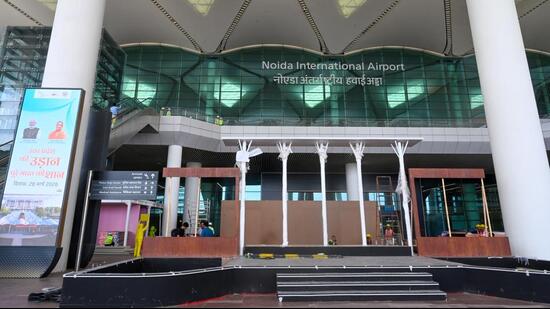
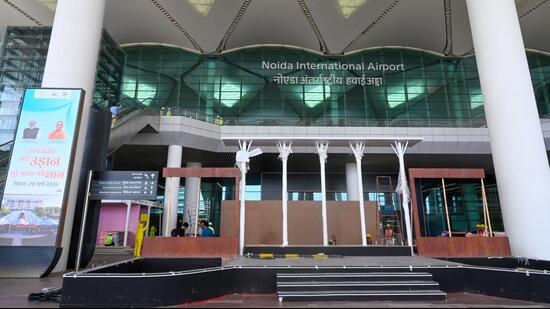
Prime Minister Narendra Modi will inaugurate the first phase of the Noida International Airport on Saturday, with the facility set to become the second international airport catering to the national capital region (NCR), according to a statement issued by the government on Thursday.
The Noida airport will have a passenger capacity of 70 million, and is expected to ease the pressure on Delhi’s Indira Gandhi International Airport (IGIA).
“At around 11.30am, he (PM) will undertake a walkthrough of the Terminal Building of Noida International Airport at Jewar, Gautam Buddha Nagar. Thereafter, at around 12 noon, the Prime Minister will inaugurate Phase I of Noida International Airport and address a public gathering on the occasion,” the government said in its statement.
The airport, envisioned as a major international gateway for the NCR, represents a significant step in strengthening the country’s airport infrastructure and enhancing regional and international connectivity, the government said.
Phase I of the airport, developed at a total investment of around ₹11,200 crore on a public-private partnership (PPP) model, is among the largest greenfield airport projects in the country, the statement said.
The airport will initially have a passenger handling capacity of 12 million passengers per annum (MPPA). As per the master plan submitted by Yamuna International Airport Private Limited (YIAPL), initial passenger traffic is forecast at 4 MPPA.
The airport has a 3,900-metre runway capable of handling wide-body aircraft, such as the Boeing 777-300ER, along with modern navigation systems, including Instrument Landing System (ILS) and advanced airfield lighting.
The government said the airport also incorporates a cargo ecosystem, including a multimodal cargo hub featuring an integrated cargo terminal and logistics zones. The cargo facility is designed to handle over 250,000 metric tonnes annually, expandable to around 1.8 million metric tonnes, and includes a dedicated 40-acre maintenance, repair and overhaul (MRO) facility.
“Noida International Airport aims to operate as a net-zero emission facility, integrating energy-efficient systems and environmentally responsible practices. Its architectural design draws inspiration from Indian heritage, incorporating elements reminiscent of traditional ghats and havelis, thereby blending cultural aesthetics with modern infrastructure,” the government said.
“Strategically located along the Yamuna Expressway, Noida International Airport is planned as a multi-modal transport hub with seamless integration across road, rail, metro, and regional transit systems, ensuring efficient connectivity for passengers and cargo,” it added.
The airport’s catchment area, defined by a 120-minute free-flow travel time, includes Delhi, Ghaziabad, Gautam Budh Nagar and parts of Meerut, Sonepat, Jhajjar and Rewari.
The Noida International Airport will serve as the primary international airport for Noida, Meerut, Ghaziabad, Mathura and Agra, and will also act as a gateway to several pilgrimage and tourist destinations.
Zurich Airport International AG won the bid to develop the airport at Jewar and signed the concession agreement on October 7, 2020, through a special purpose vehicle, Yamuna International Airport Private Limited. Under the agreement, YIAPL has developed the airport under the design, build, finance, operate and transfer (DBFOT) model for an initial concession period of 40 years.
The concession period commenced on October 1, 2021. On March 5, the airport received security clearance from the Bureau of Civil Aviation Security (BCAS) followed by the aerodrome licence by the regulator, the Directorate General of Civil Aviation (DGCA).